28 September 20262 min read
Privacy as a product decision
How Mommy Refuel treats trust as the core feature of a wellbeing app — guest-first, an on-device journal, consent-gated AI — and why those choices shaped the product, not just the policy.

Mommy Refuel is a private daily companion for the person behind the mother. One minute to notice mood, energy and sleep, a Refuel Score to see patterns, and a small next step — without turning motherhood into another thing to get right.
An app like that asks people for something delicate: an honest answer to "how are you, really?" Nobody gives that answer to a product they don't trust. So privacy couldn't be a page in the footer. It had to be designed into the product from the first screen.
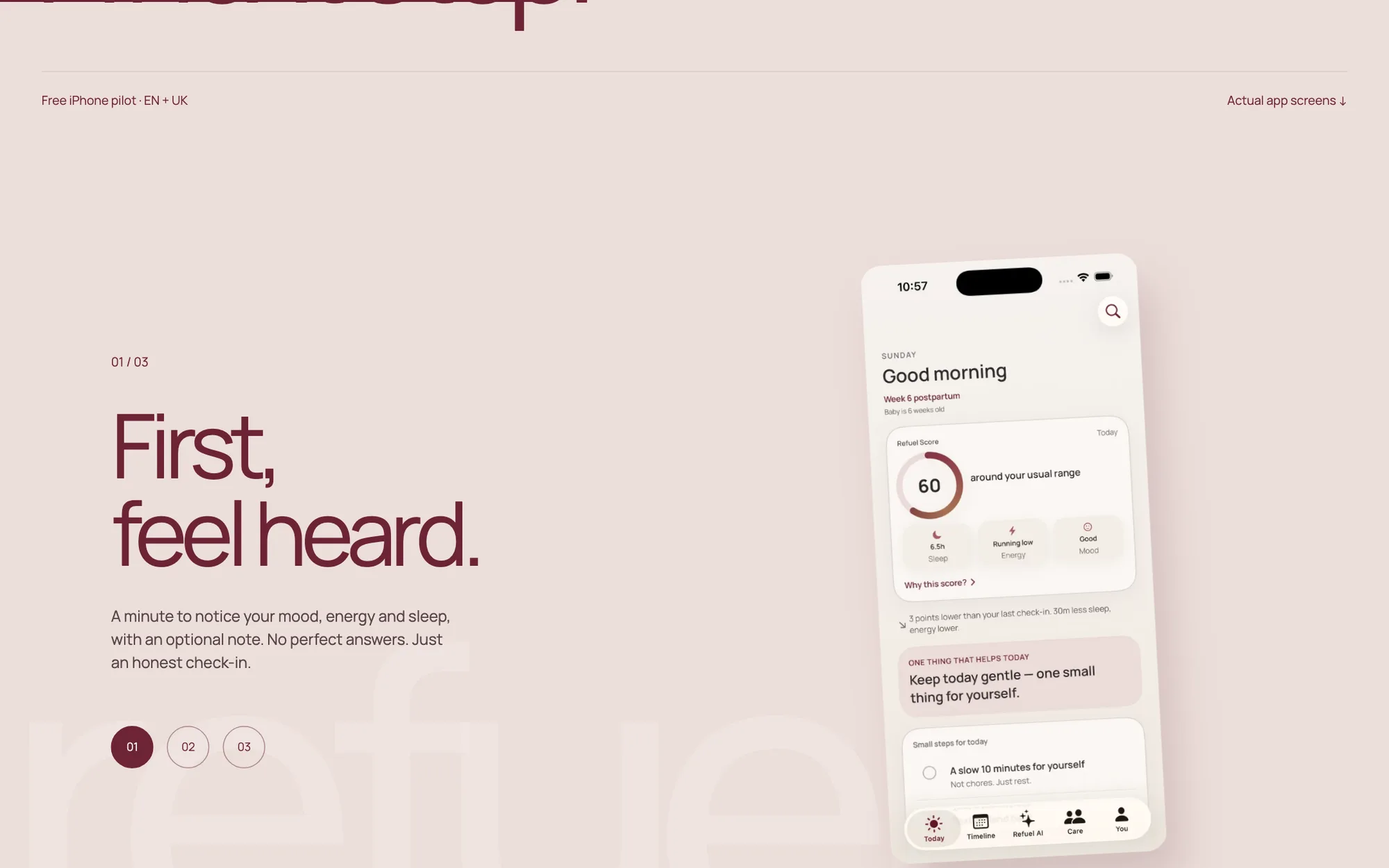
Start without an account
The pilot is guest-first. You can open the app and check in without signing up. That removes the biggest barrier for a tired parent at 2 a.m. — but it's also a statement: the app earns your details later, if at all.
The journal never leaves the phone
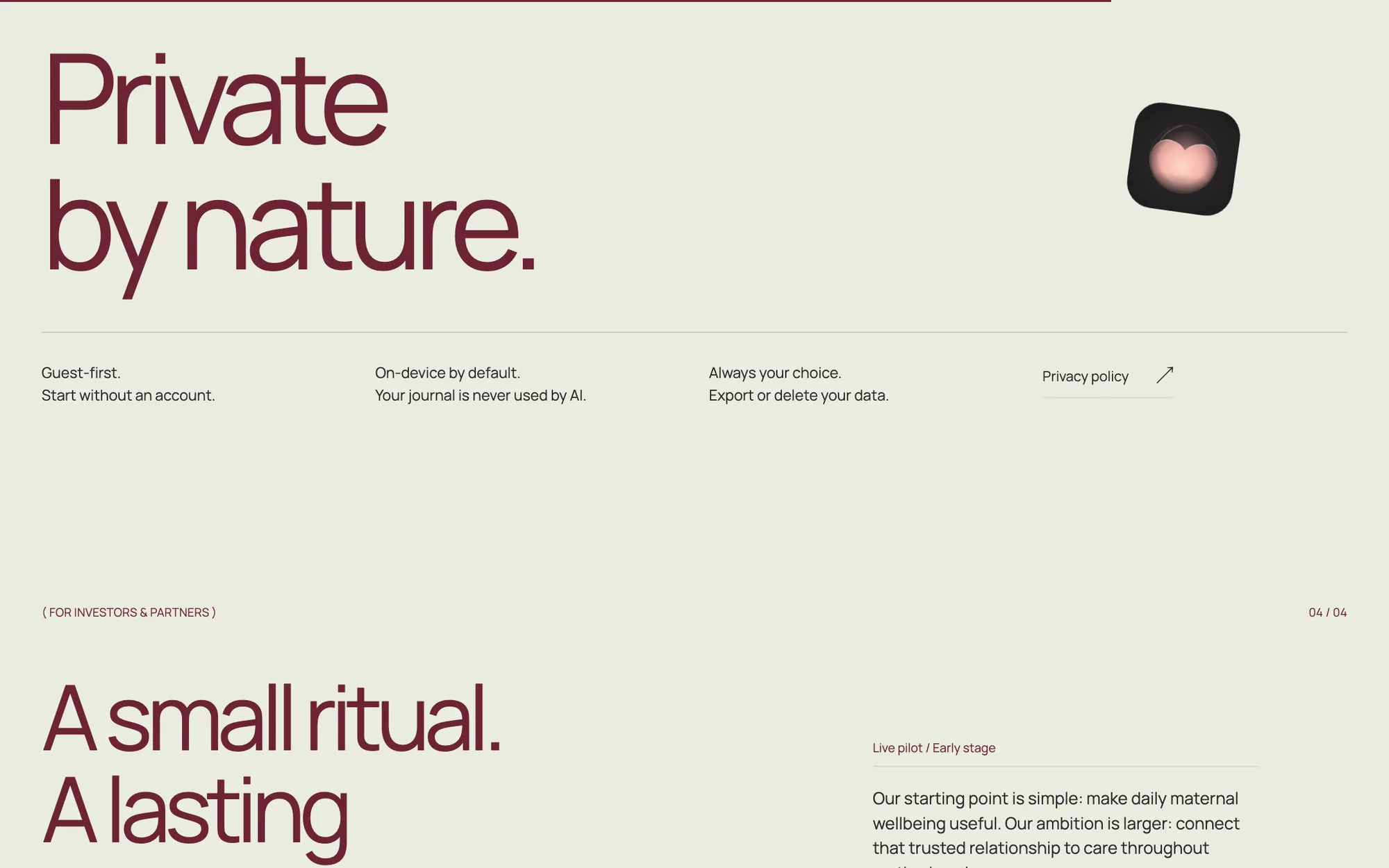
The private journal is on-device by default and never used by AI. That one rule settles a lot of hard questions in advance. There's no ambiguity about whether a late-night note will end up in a model, a dataset or a support ticket. It won't.
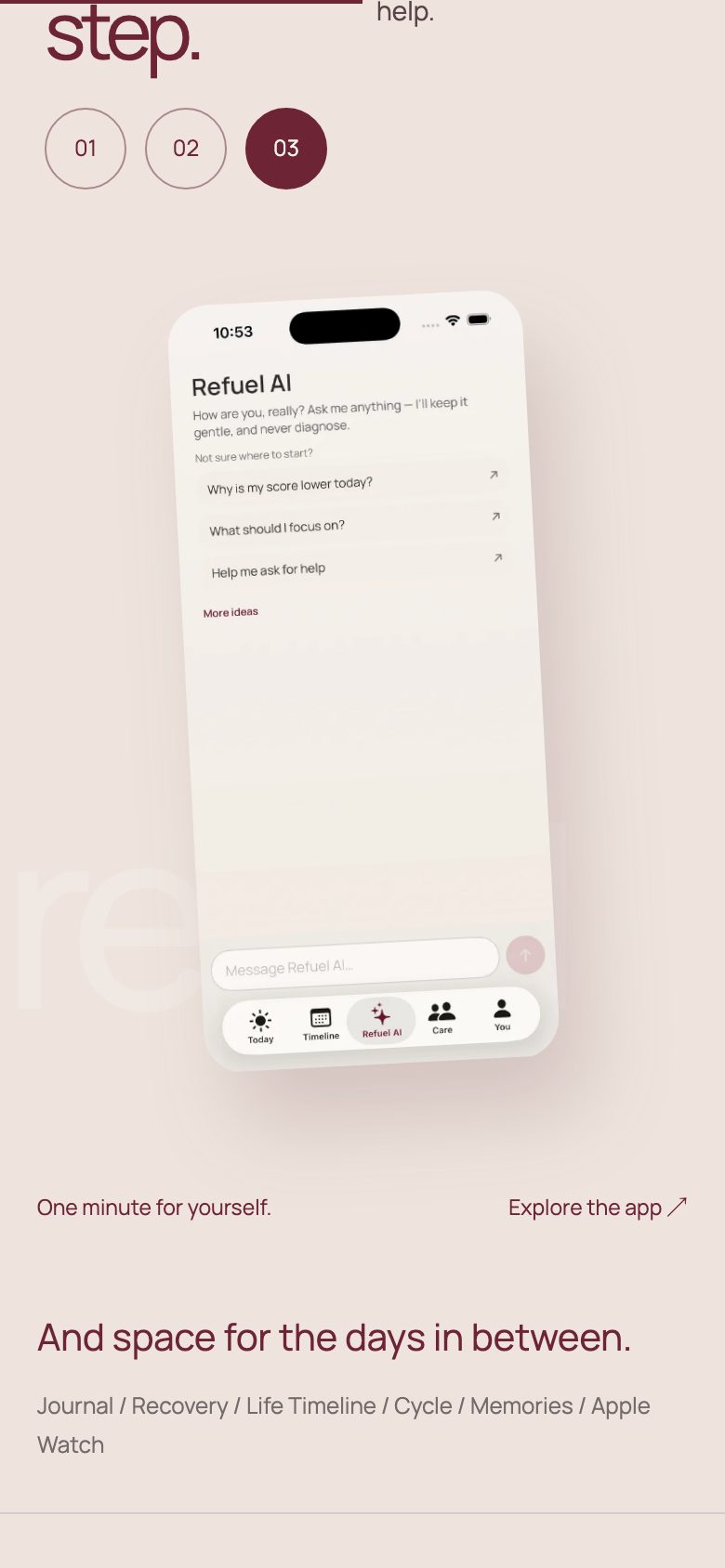
AI only with consent
Mommy Refuel does use AI — to help find a gentle next step or put a day into context. But it is consent-gated: the person decides when it's used and on what. The AI features are useful precisely because they're optional.

Your data, your choice
People can export or delete their data at any time. It sounds like a compliance checkbox. In practice it changes how the product is built, because every feature has to work with data that might disappear tomorrow.
Careful with what we claim
Mommy Refuel offers wellbeing support, never medical diagnosis or treatment, and the product says so plainly. The Refuel Score is a guide for noticing patterns, not a verdict. Being honest about the limits is part of being trustworthy.
People come back to a place where they feel safe being honest.
Why this is good product strategy
It's tempting to treat privacy as a cost. For Mommy Refuel it's the opposite — it is the reason the daily ritual works at all. People come back to a place where they feel safe being honest, and that daily return is what makes everything later possible: richer context, shared care, and a wider network of support, all built on consent.
If you're building anything that asks people to be vulnerable, start with the question: what would make someone trust this at their worst moment? Then design that in before you design anything else.
— Serhii Rohachov, Kyiv