16 July 20263 min read
Moving 331 photographs
Rebuilding the ater.architects portfolio meant leaving Squarespace for a custom WordPress theme — without losing a single image, link or bit of order the studio had built up over the years.
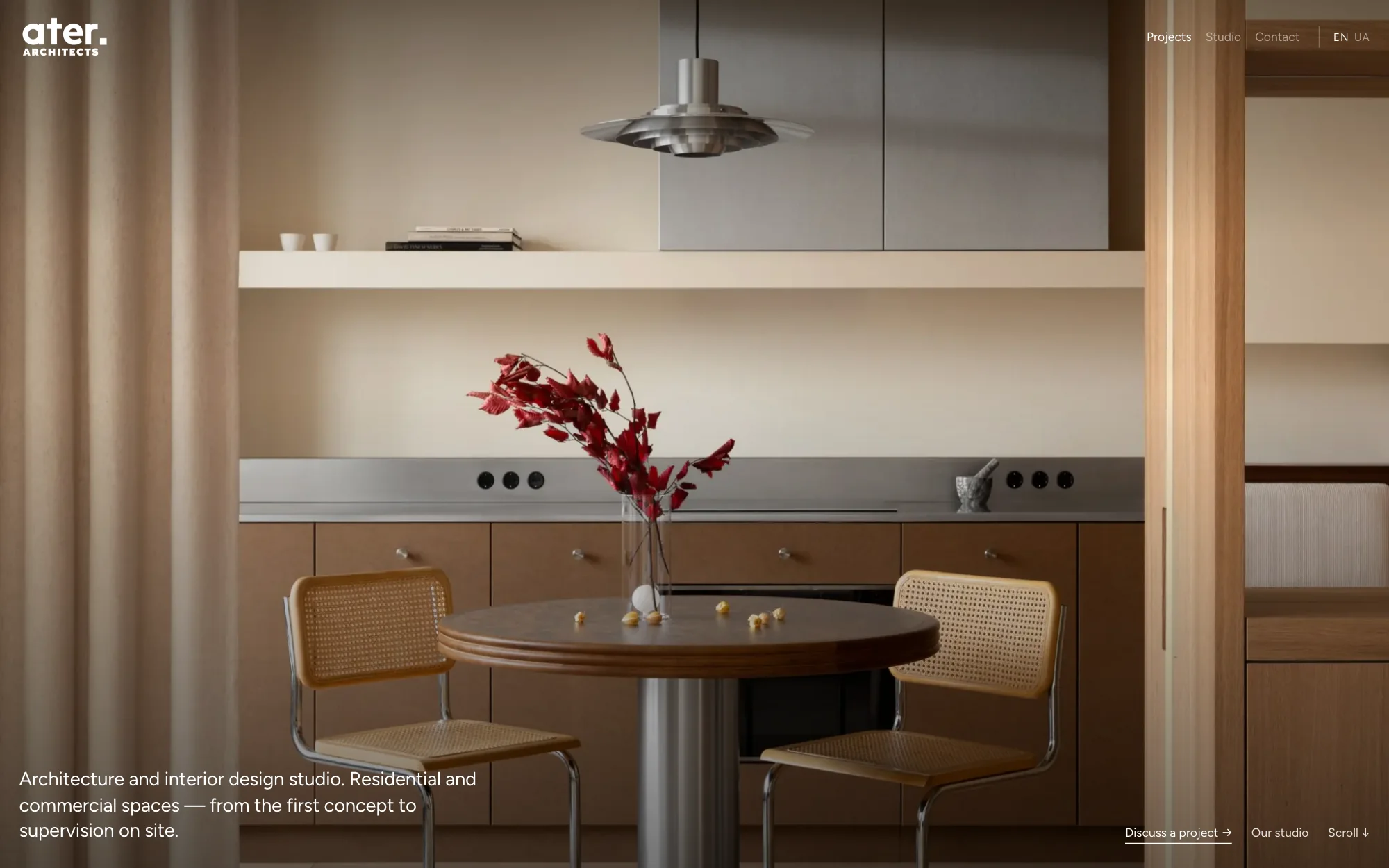
ater.architects is an architecture and interior design studio from Kyiv. Its portfolio lived on Squarespace, in English only, and it had reached the limits of what a template could do. The rebuild sounded simple — new theme, new platform, a Ukrainian version. In practice, most of the work was about moving things without breaking them.
Why leave Squarespace
Squarespace is a good place to start a portfolio. It's a hard place to grow one. The studio ran into the same walls again and again:
- The project page couldn't change. The team had no control over how photographs, text and drawings were laid out.
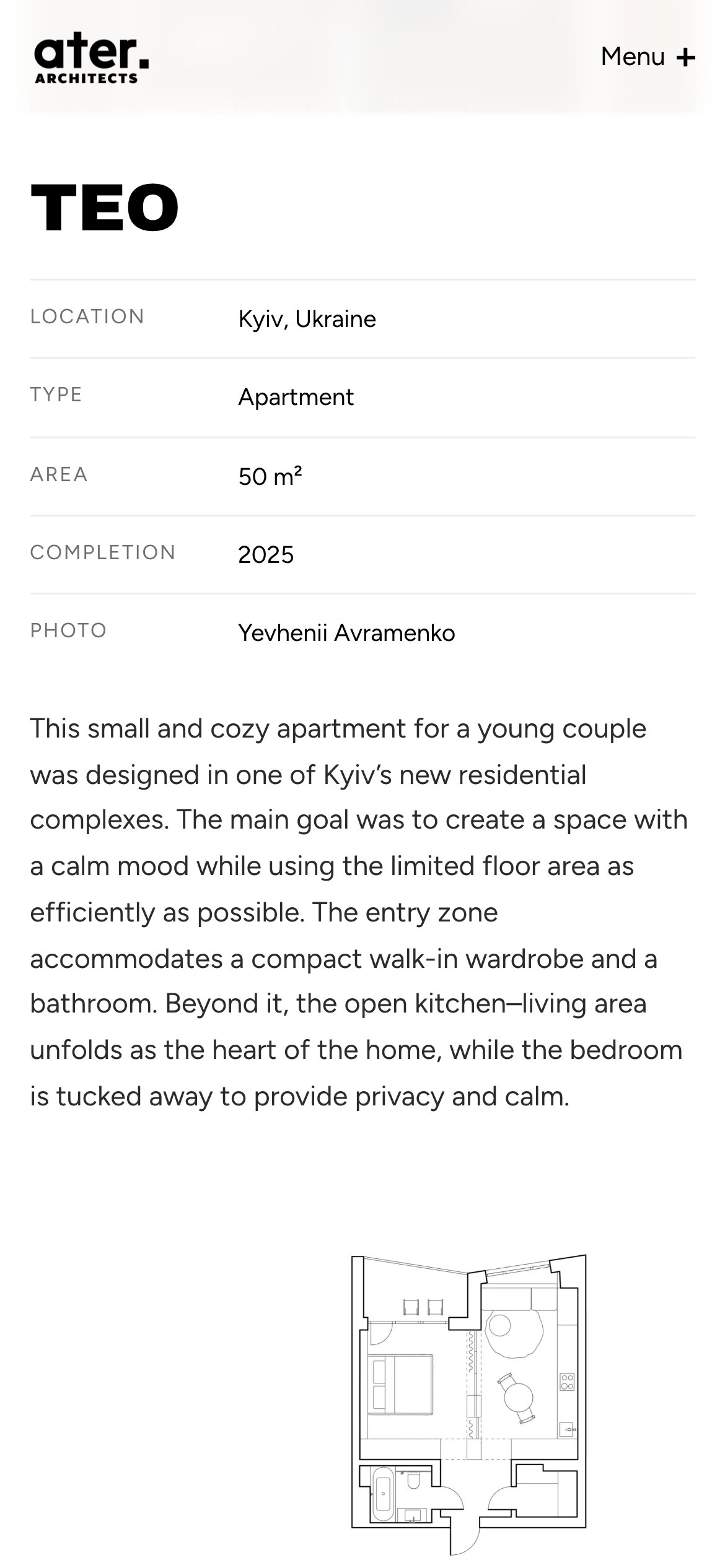
- Floor plans suffered on mobile. A dark caption card sat over every plan on the phone, hiding exactly the drawing an architect wants seen.
- Tall photographs meant endless scrolling on a desktop screen.
- One language. Clients in Ukraine read a portfolio written only in English.
Nine projects, 331 photographs, the original order
An architecture portfolio is curated. The order of photographs in a project is a story — approach, entrance, living space, detail — and the studio had already told it. So the migration moved all nine projects and 331 photographs from the studio's own archive, in their original order.
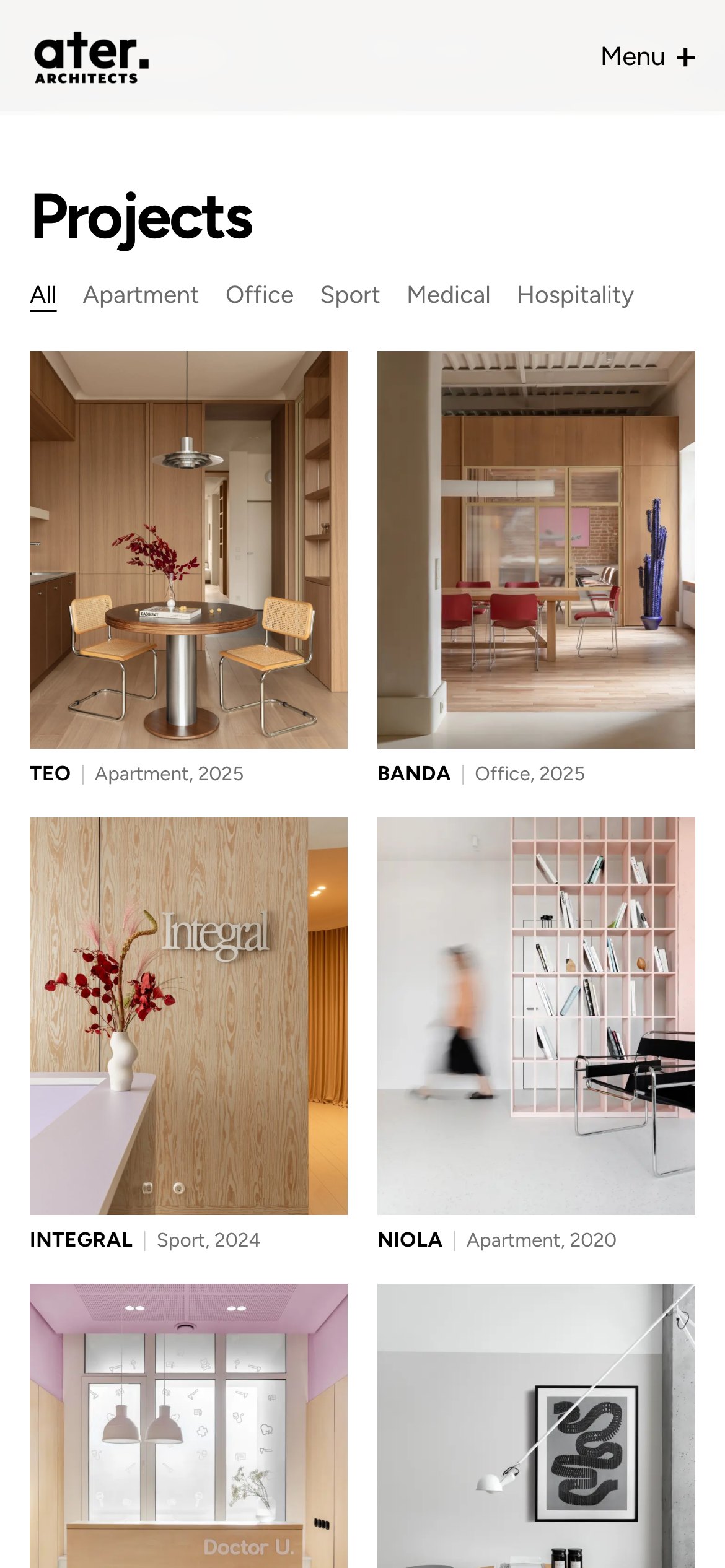
Along the way, each project got proper fields instead of a free-text block: location, type, area, year and photographer. That makes the details consistent on every page, and it lets the project grid filter by type.
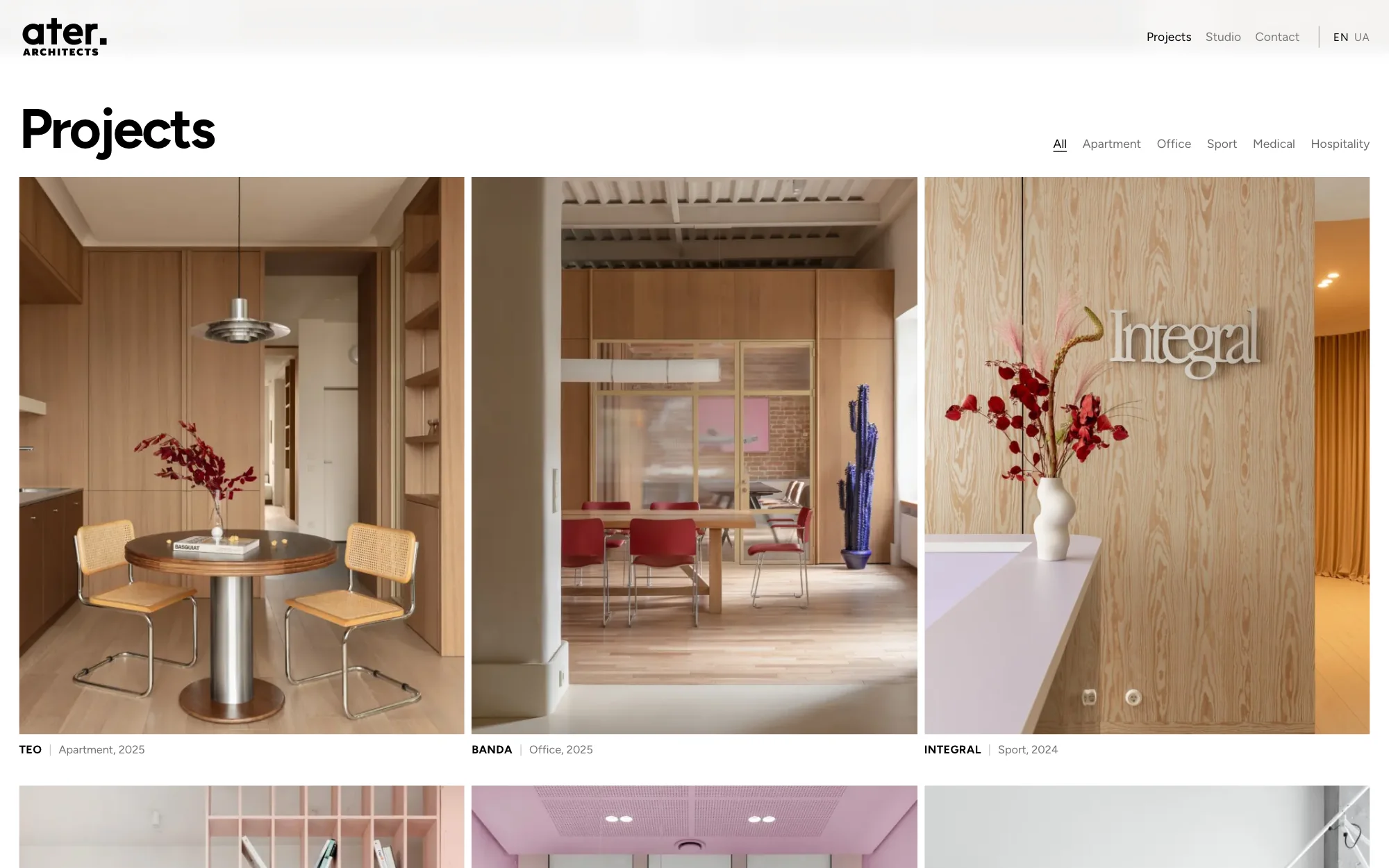
A project page built for architecture
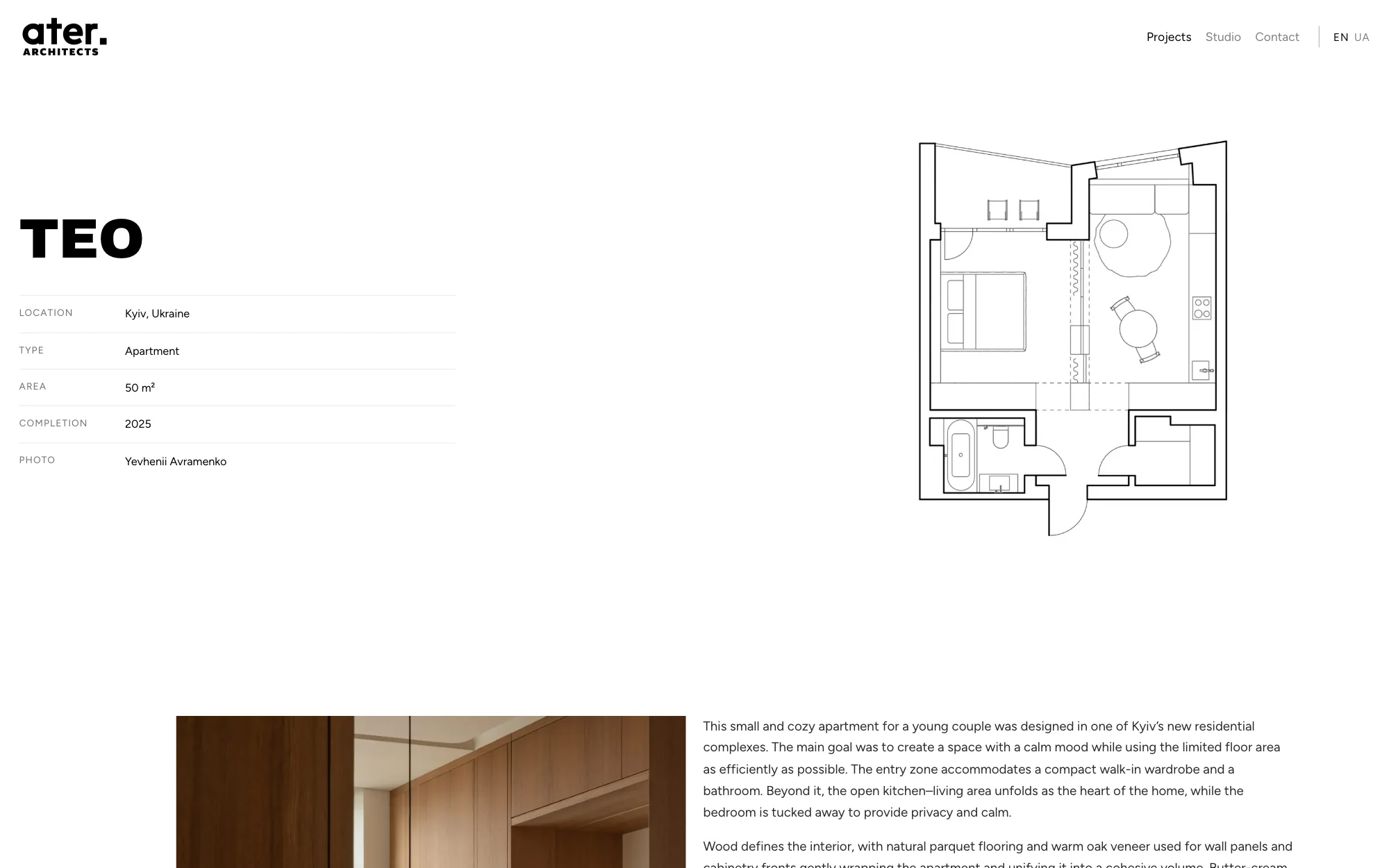
The new project page is designed around how architects actually present work:
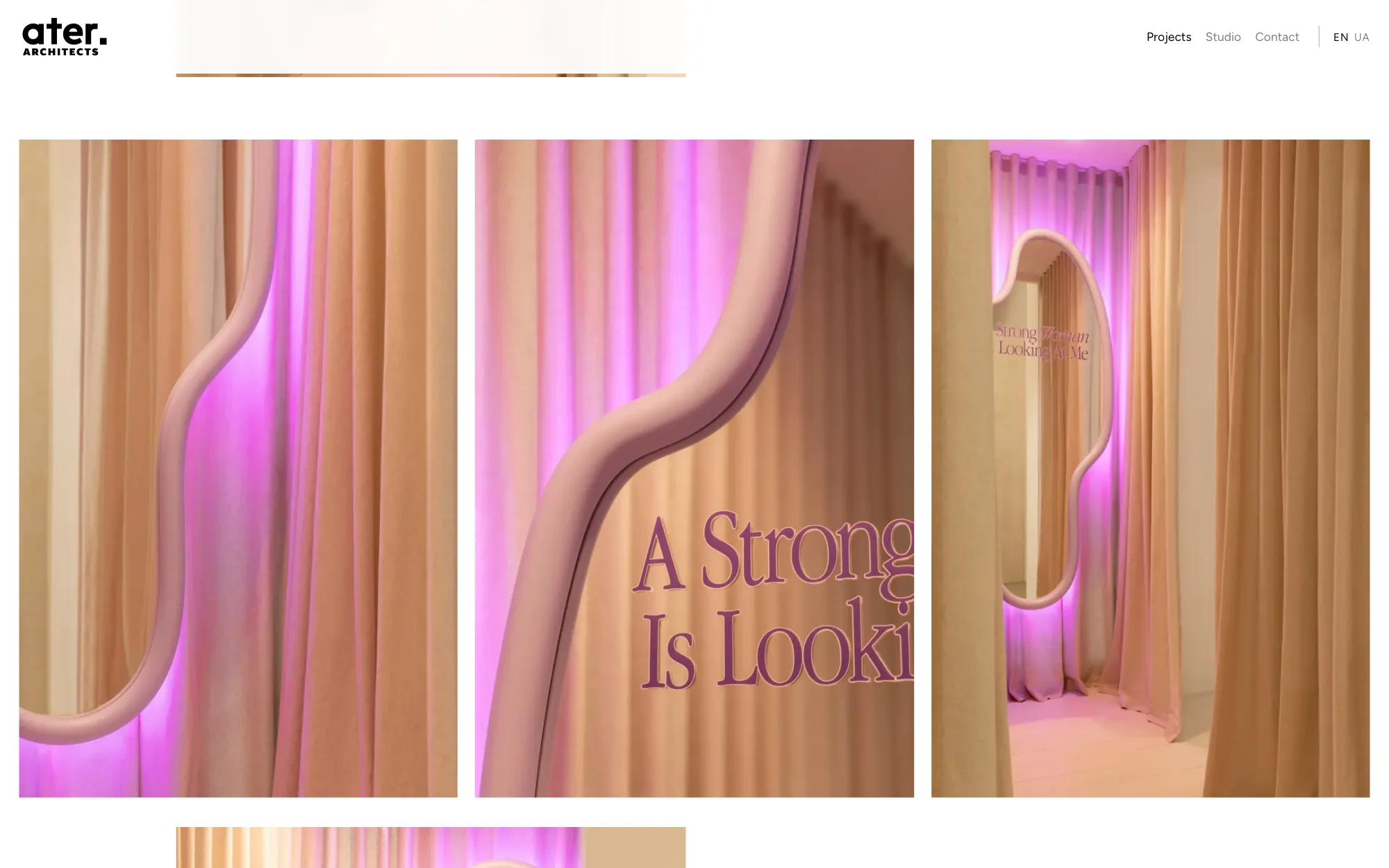
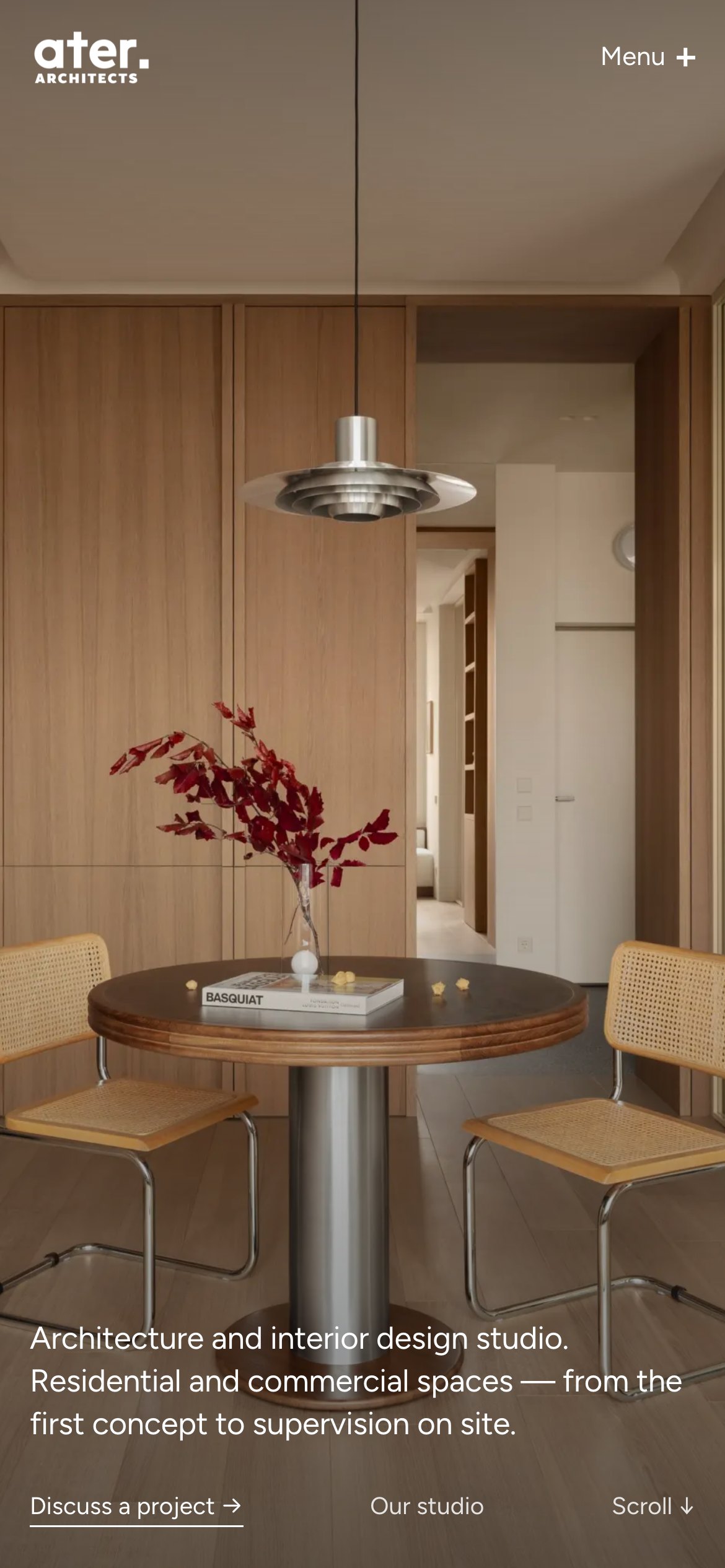
- A full-width opening photograph sets the mood.
- The title and details sit next to the floor plan, so the plan is read, not decorated.
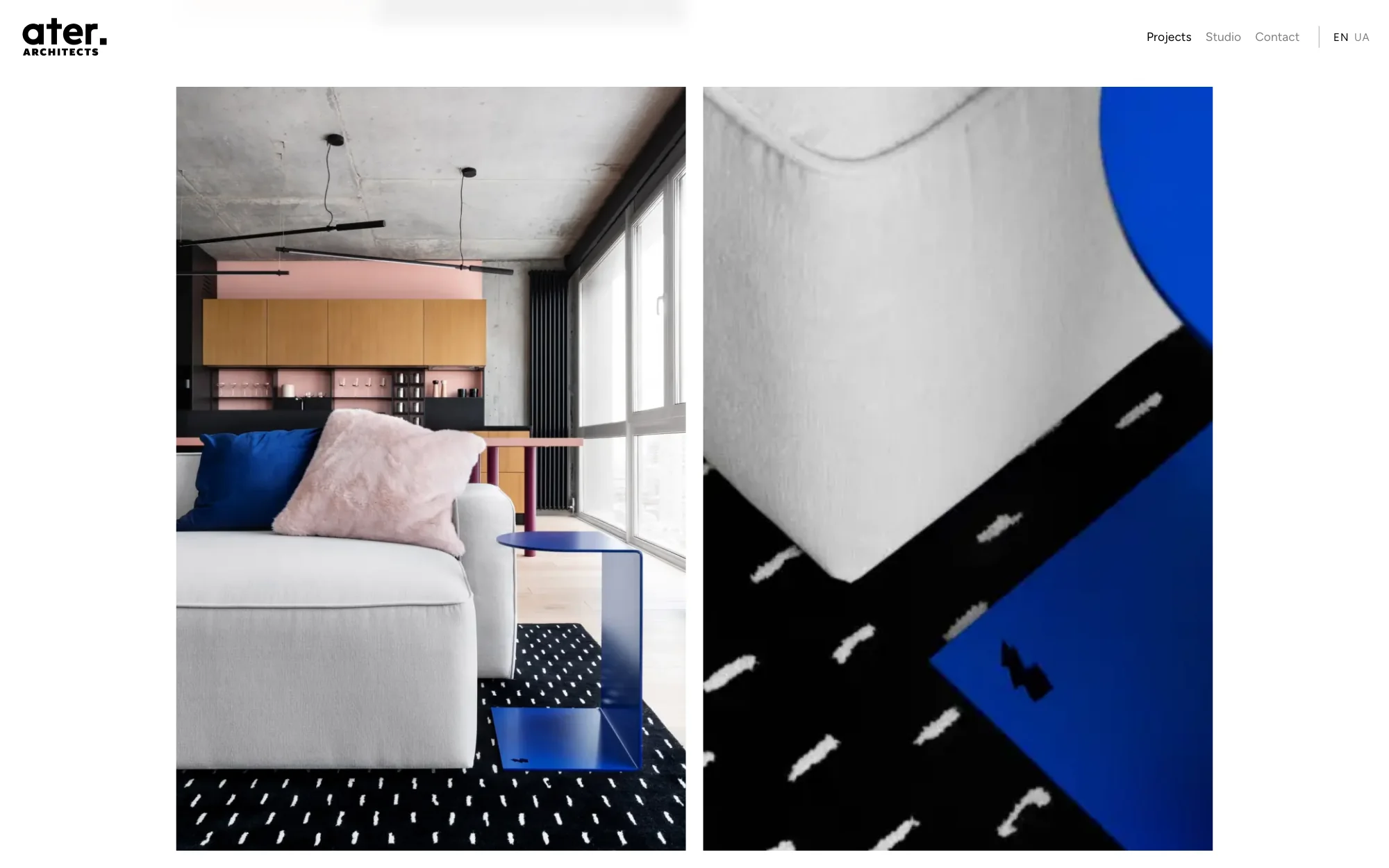
- Then photographs follow in pairs, in threes or beside the text, so tall images don't turn into a long scroll.
- Any photograph opens in a full-screen viewer.
Two languages, the same addresses
The Ukrainian version lives at the same addresses under /uk/, page for page. Search engines are told which page is the translation of which, and every project carries its own title, description, share image and structured data.
A migration is successful when nobody outside the studio notices it happened.
Old links still work
A portfolio gets shared for years — in emails, proposals, competition entries, magazine features. All of those links pointed at Squarespace addresses. Every one of them was mapped, so an old link still opens the right page on the new site.
What the studio has now
The team adds and edits projects itself, in English and Ukrainian, inside a theme built for its work rather than a template it has to work around. And the pages are fast: 99–100 for performance in Lighthouse on mobile, despite being almost entirely photography.
What generalises
When you migrate a portfolio, treat the content as the client's work, not as data. Keep the order, keep the links, keep every image — then improve everything around them.
— Serhii Rohachov, Kyiv