20 October 20262 min read
Don't fight the clothes
Two fashion stores, Divenco and Caustica, with very different characters — and the same rule underneath: the interface steps back so the collection leads, while real commerce runs quietly below.
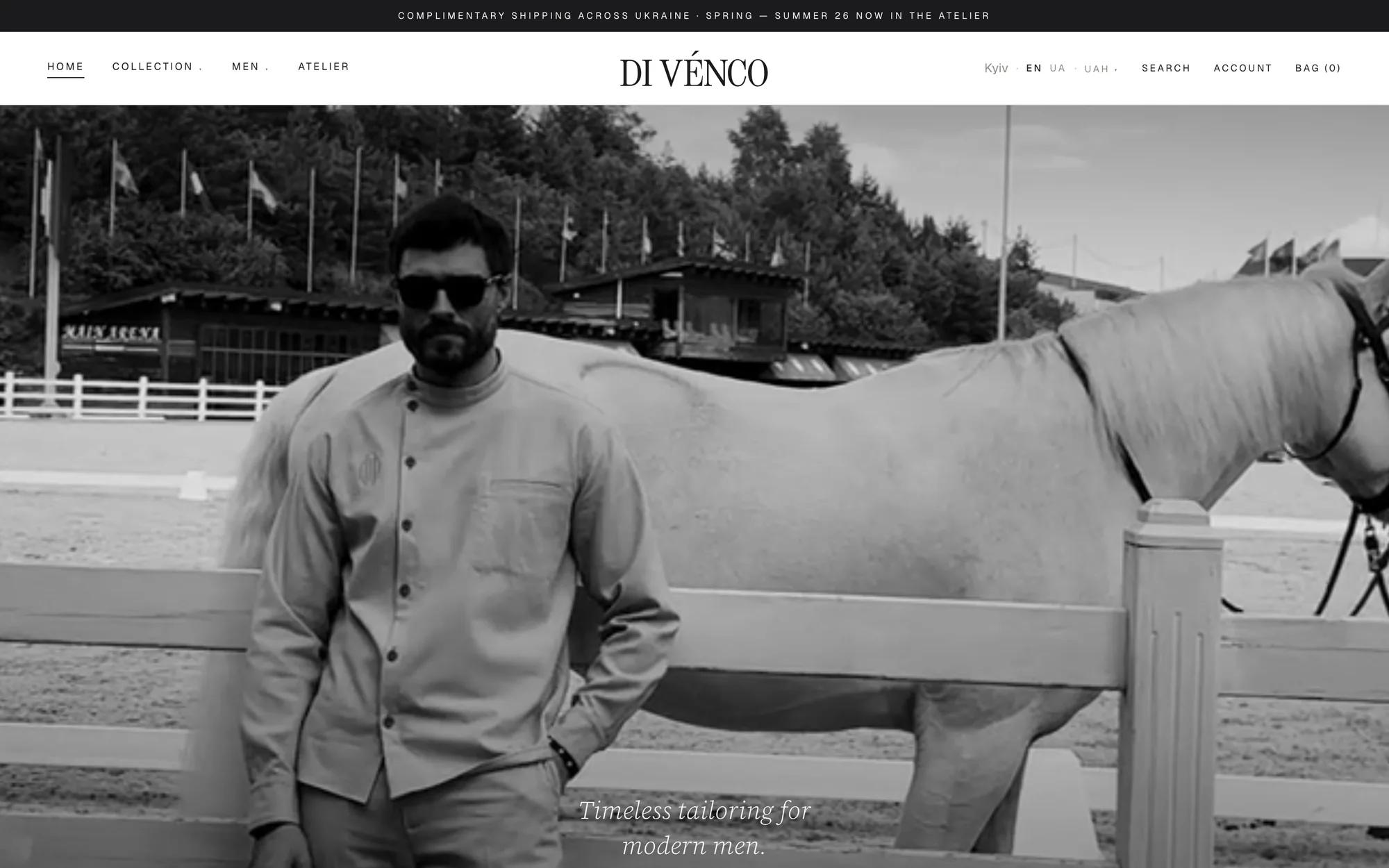
Fashion websites have a habit of competing with the clothes. Too many cards, badges, banners and pop-ups, and the collection becomes one more element on a busy page. I've built two fashion stores with very different personalities — and the same rule underneath both.
Divenco: from collection preview to store
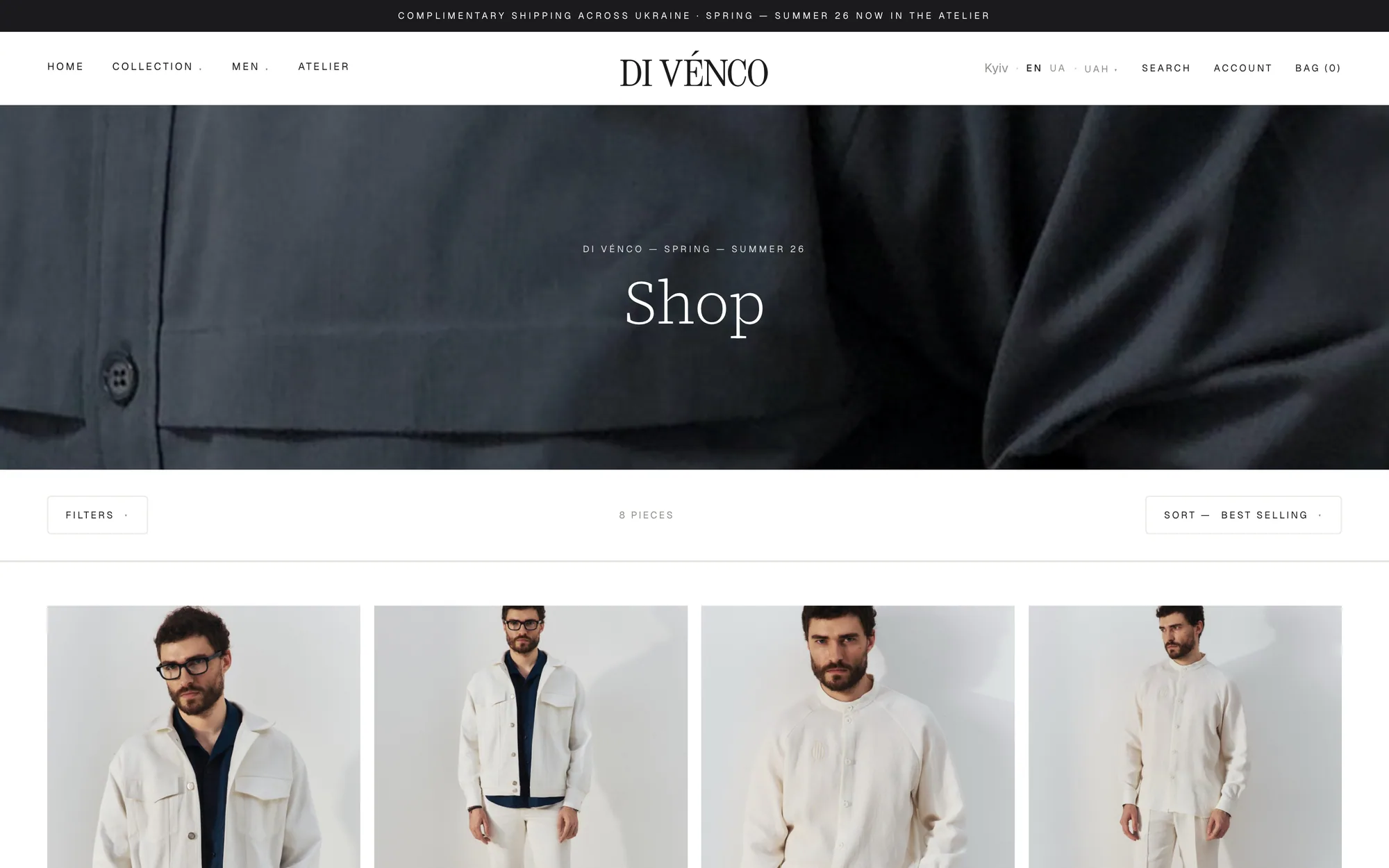
Divenco is a Kyiv atelier: garments cut and finished locally, shown in a calm palette of ivory, sand and navy. The site had to introduce a limited collection first and grow into a full store later, without a redesign in between.
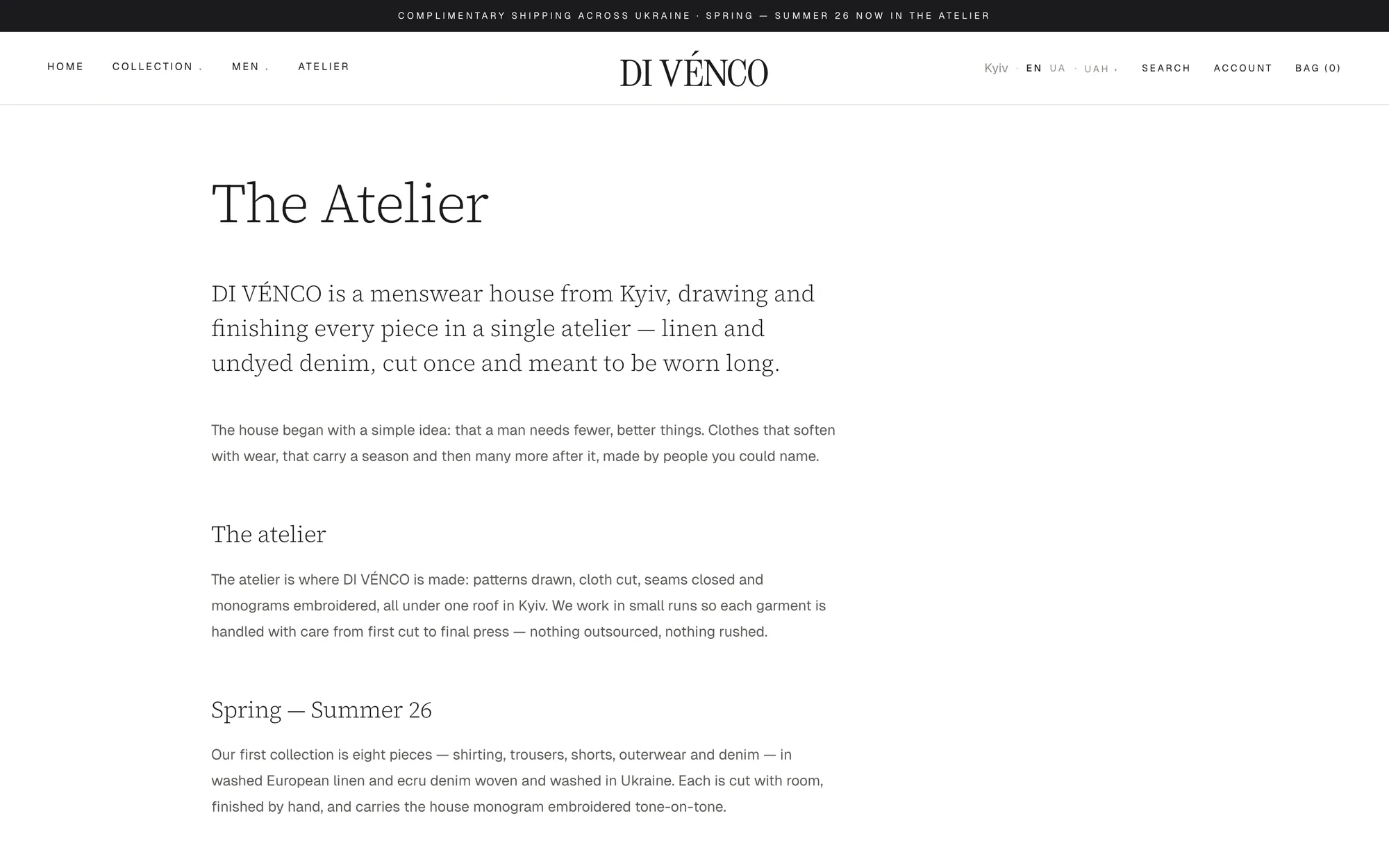
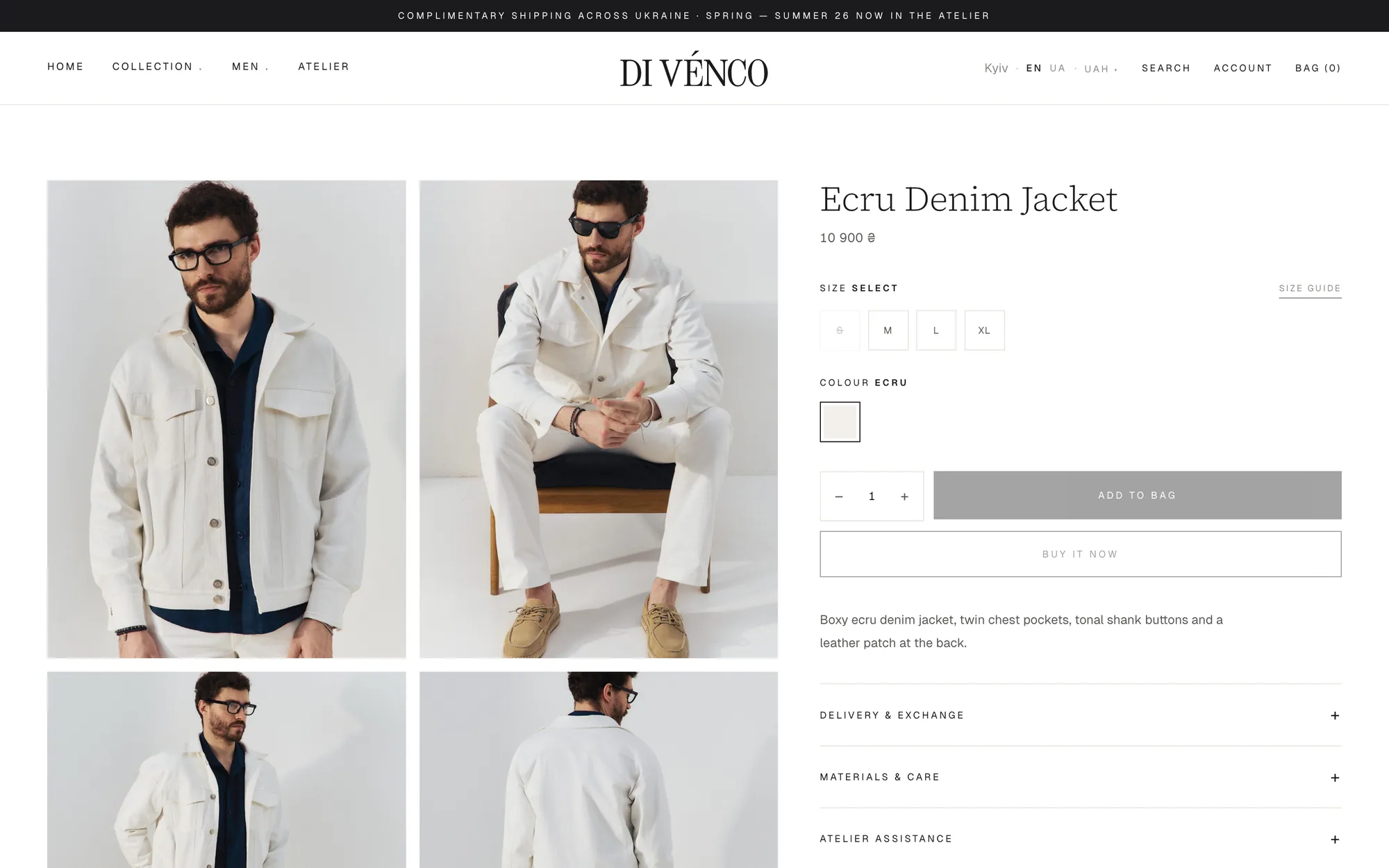
The visual system is deliberately reduced: large photography, precise typography and a lot of negative space. The commerce layer sits underneath from day one, so the atelier could move from "coming soon" to selling without touching the design.
Caustica: expressive, and it still sells
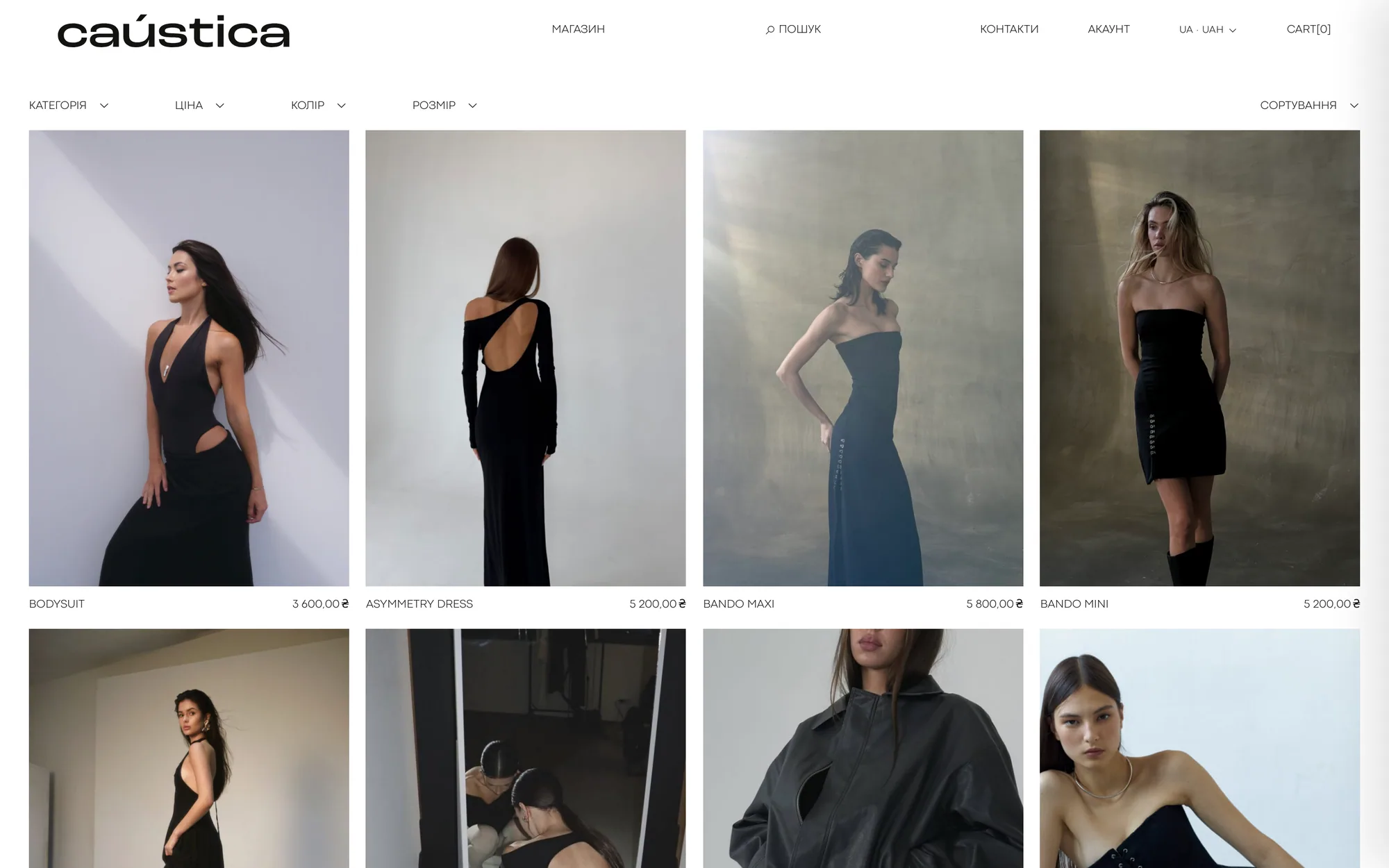
Caustica is the opposite in mood: an independent label built on experimentation, campaign imagery and caustic light. The risk here was different. A generic store would flatten the brand; a purely expressive site wouldn't sell.

The answer was to separate the two layers cleanly. Campaign imagery and motion carry the identity. Underneath, WooCommerce is adapted for products, variations, currency and checkout — and the visible interface around them stays minimal.
The shared rule
- Imagery leads. Product photos and campaign frames are the largest thing on every page.
- The interface recedes. Navigation, filters and buttons are present, consistent and small.
- Commerce is real, but quiet. Variations, currency and checkout work properly; they just don't shout.
- Mobile first. A lot of fashion browsing happens on a phone, so both stores were designed for it.
The best fashion interface is the one you don't remember — you remember the clothes.
If you're building a store for a label, ask a simple question of every element on the page: does it help the collection, or compete with it?
— Serhii Rohachov, Kyiv