6 October 20263 min read
A showroom without a cart
Why the Sofa Store site sells restored vintage furniture with a request instead of a checkout — and how the interface makes that feel deliberate, not missing.
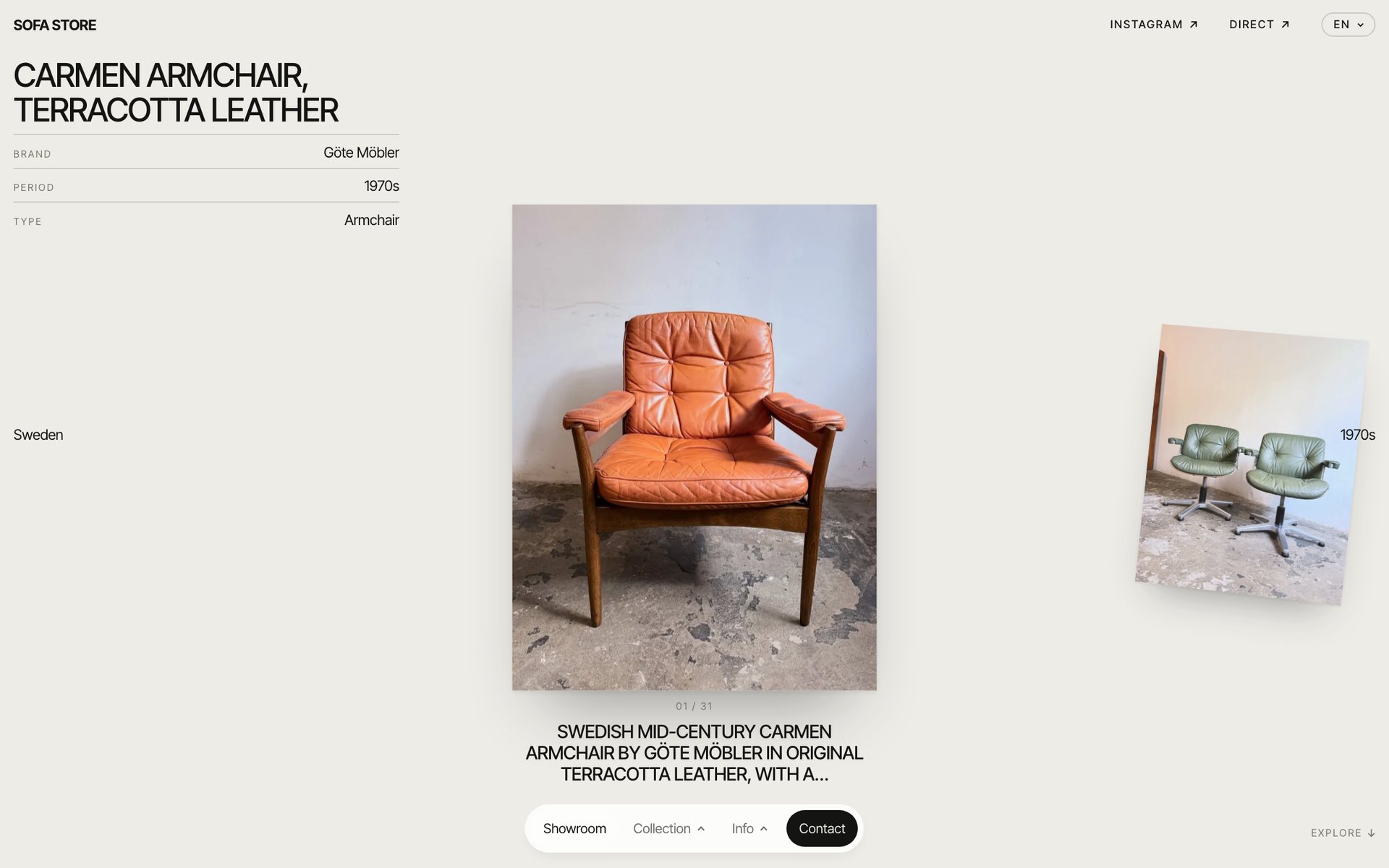
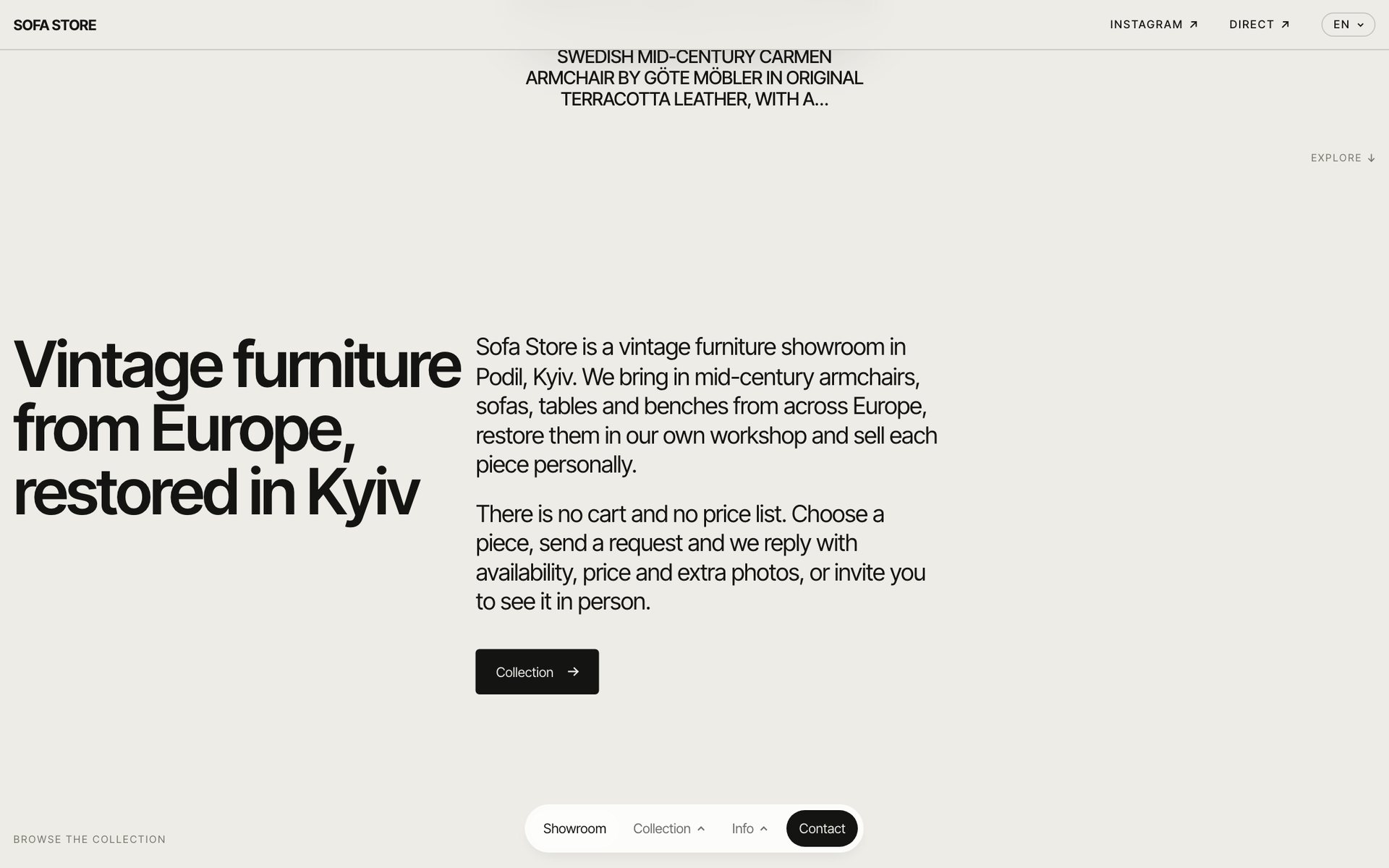
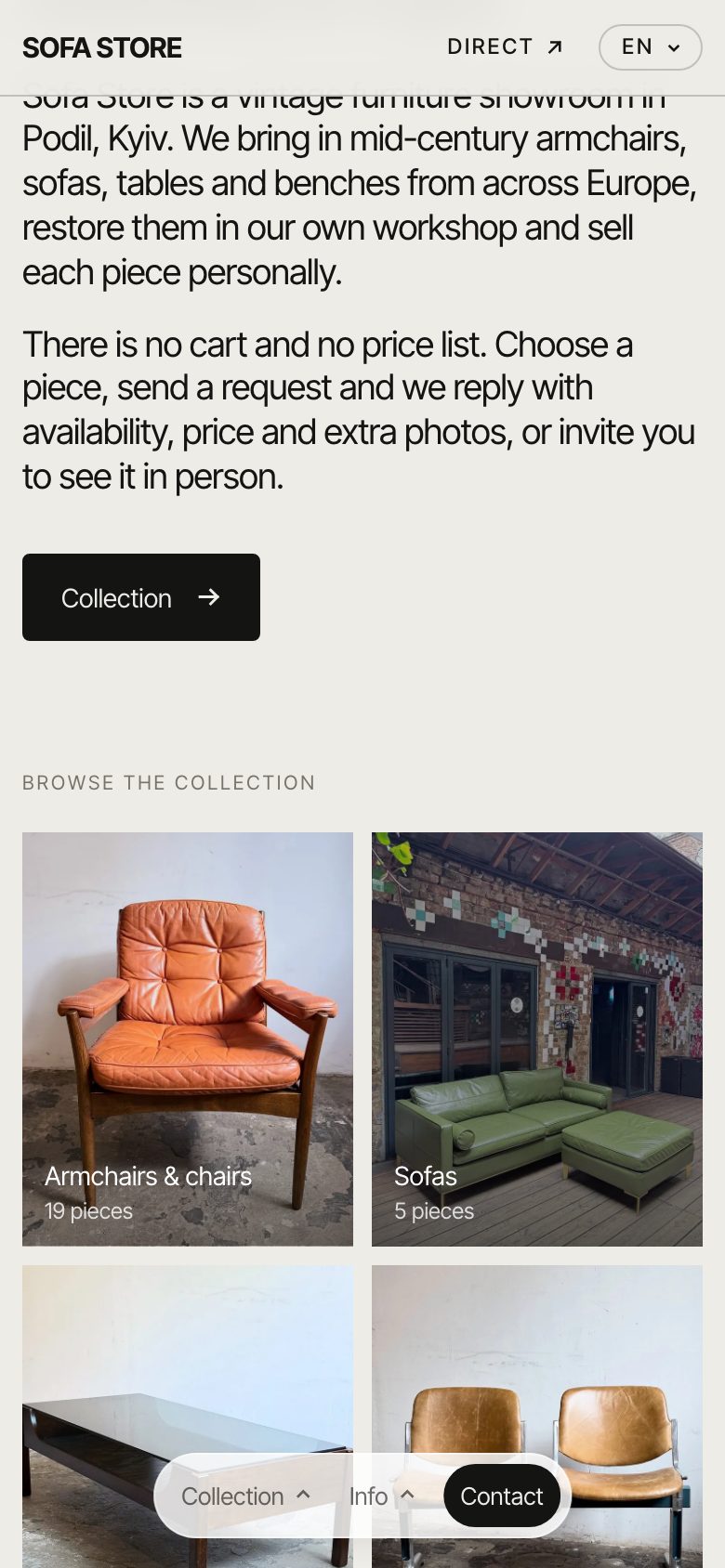
Sofa Store brings mid-century armchairs, sofas, tables and benches into Kyiv from across Europe, restores them in its own workshop in Podil, and sells each piece personally. When we started the website, the obvious move was a standard online store: product grid, add to cart, checkout.
We didn't build that. There is no cart and no price list. You choose a piece, send a request, and the store replies with availability, price and extra photos — or invites you to see it in person.
Why a checkout was the wrong tool
A cart assumes stock: ten identical items, a fixed price, a predictable delivery. None of that holds for restored vintage.
- Every piece is one of a kind. A 1970s Göte Möbler armchair in original terracotta leather is not a SKU. Once it's sold, it's gone.
- Condition is the product. People want to know what was restored, what's original and what the leather looks like up close. A checkout skips exactly the conversation that sells the piece.
- The buyer is often unsure. Will it fit? Can it be delivered across Kyiv? Is there something similar in green? Those are questions, not transactions.
So the site's job became to make the piece irresistible, and then make asking about it effortless.
Designing the request
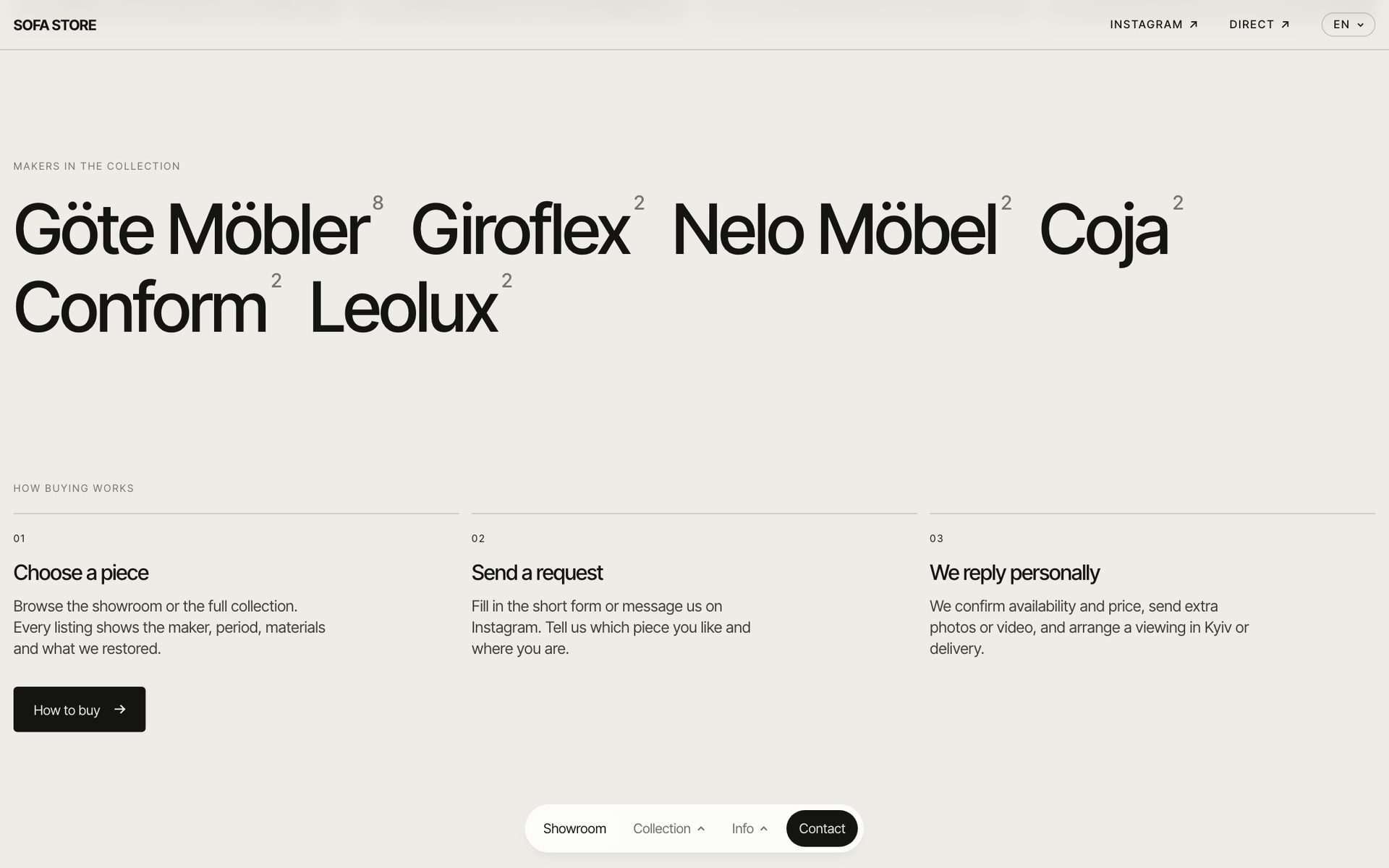
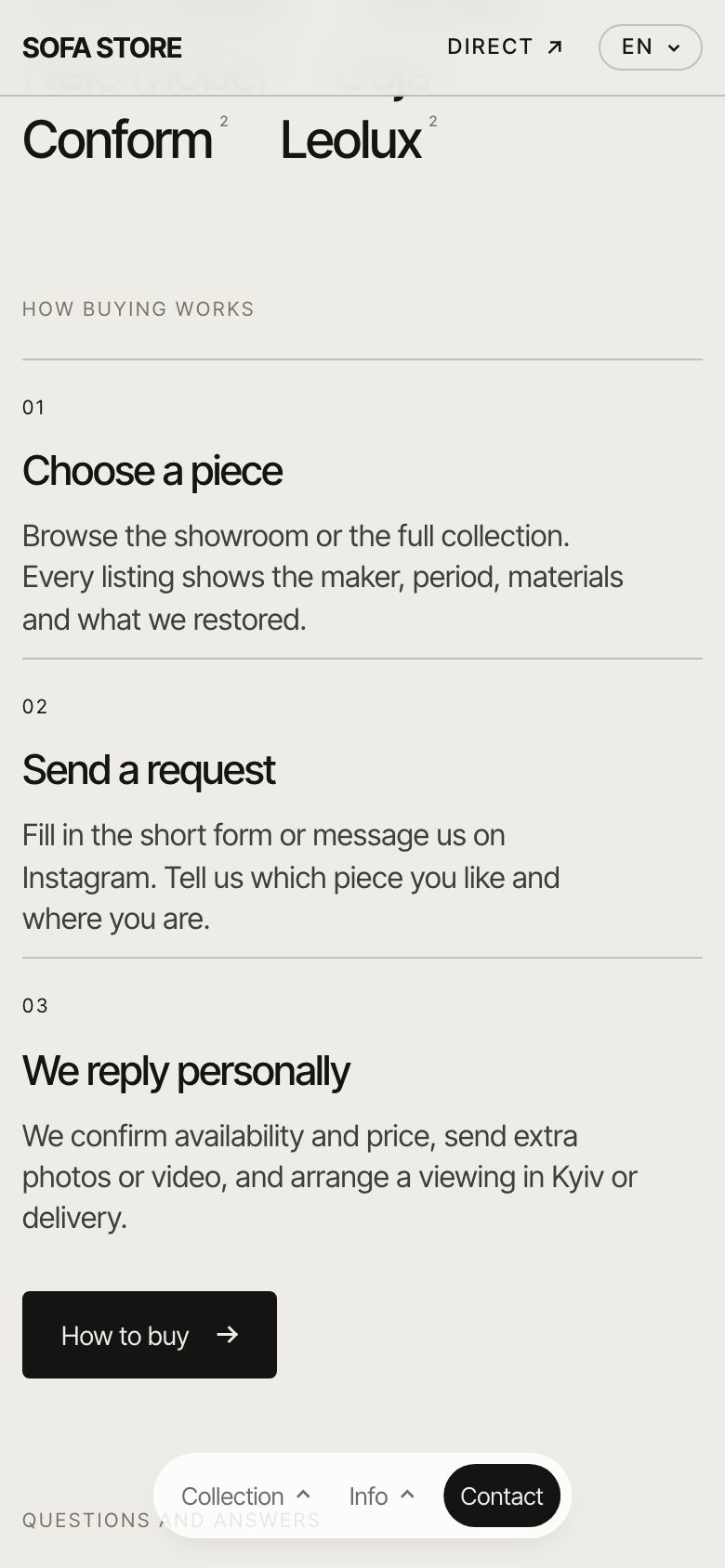
Instead of an "Add to cart" button, every piece leads to one clear action: send a request. The flow is explained up front in three steps — choose a piece, send a request, get a personal reply — so nobody is left wondering where the checkout went.
That small section matters more than it looks. Without it, a store without a cart reads as broken. With it, it reads as a service.
Letting the furniture carry the page
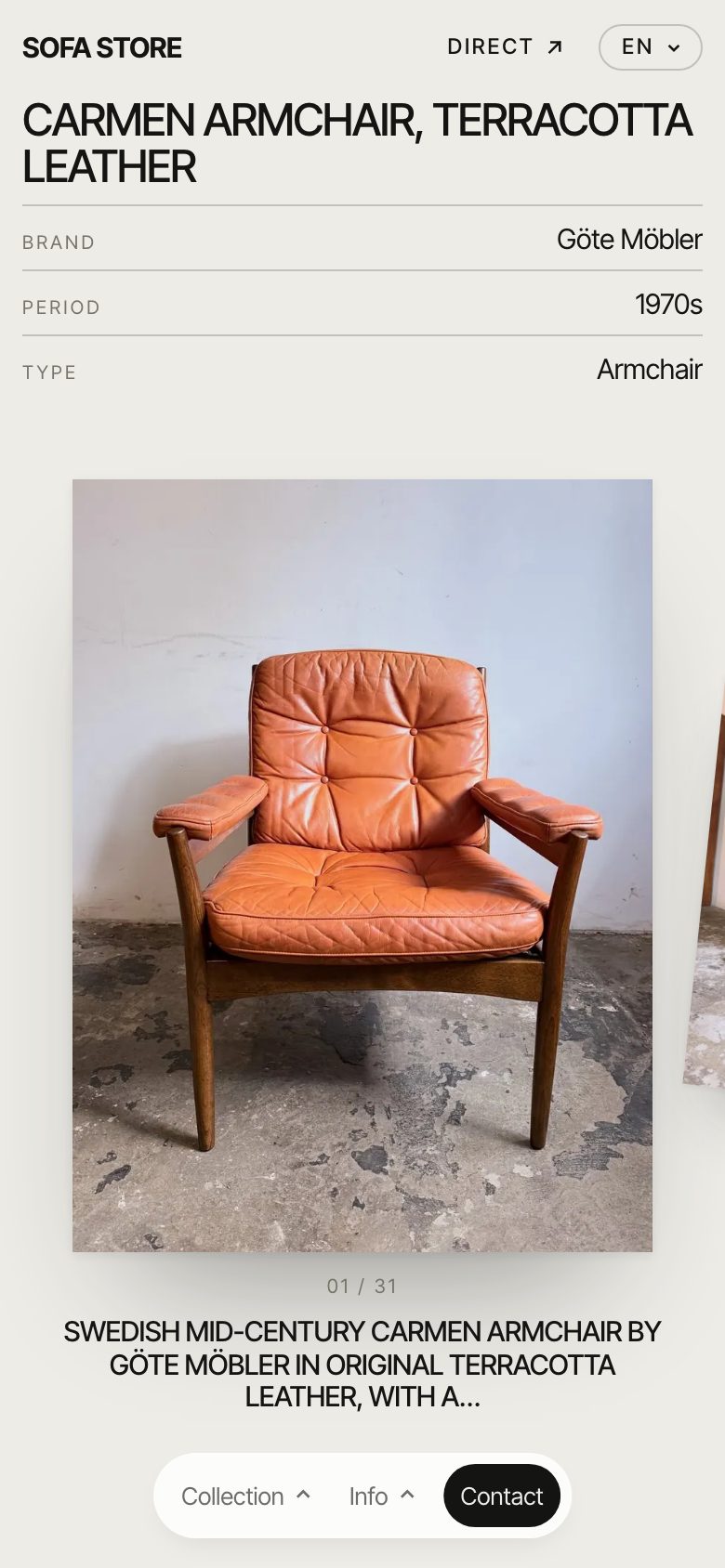
Each piece gets its own page with the facts a vintage buyer actually checks: brand, period and type, the country it came from, and a description of what was restored. The layout stays quiet — a warm off-white ground, simple type and large photography — so the leather, wood and wear do the talking.
A maker index (Göte Möbler, Giroflex, Nelo Möbel, Coja, Conform, Leolux) gives collectors a second way in. Some people shop by object; others shop by name.
Five languages, one voice
The showroom serves locals and visitors alike, so the site runs in five languages — English, Ukrainian, Russian, German and Italian. The structure stays identical in every one, which keeps the experience — and the request flow — predictable wherever the visitor comes from.
No cart. No price list. A conversation about one specific chair.
What this changes for the business
A request-based flow turns browsing into a conversation, and a conversation is where a one-of-a-kind piece is actually sold. The site doesn't try to replace the person in the showroom. It gets the right people to them, already in love with a specific chair.
If you're selling something where every item is different — vintage, art, handmade, made-to-order — it's worth asking whether you need a checkout at all.
— Serhii Rohachov, Kyiv