20 October 20262 min read
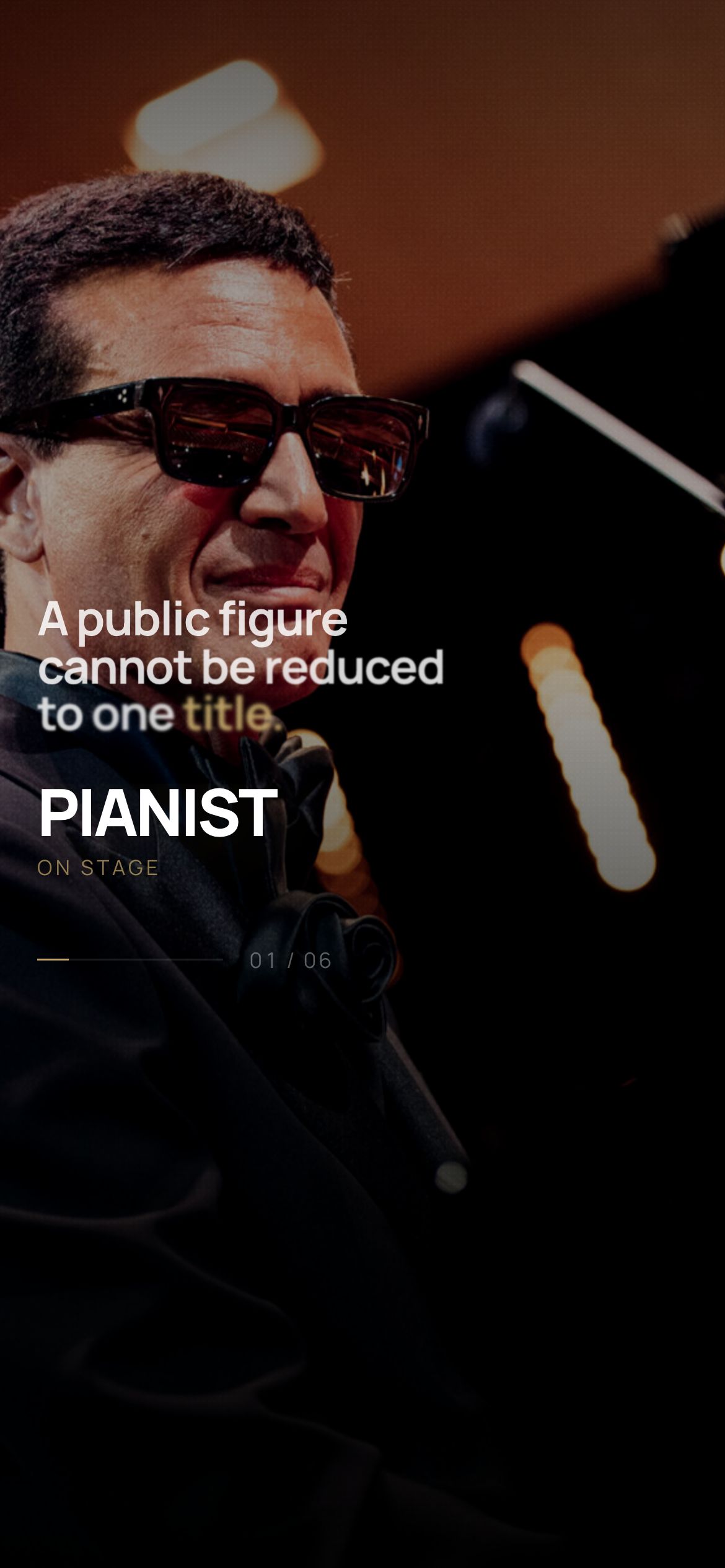
A public figure, not one title
Building Omar Harfouch's platform meant holding music, concerts, public initiatives and press in one cinematic presence — in English, French and Arabic — without turning it into a corporate profile or a fan page.
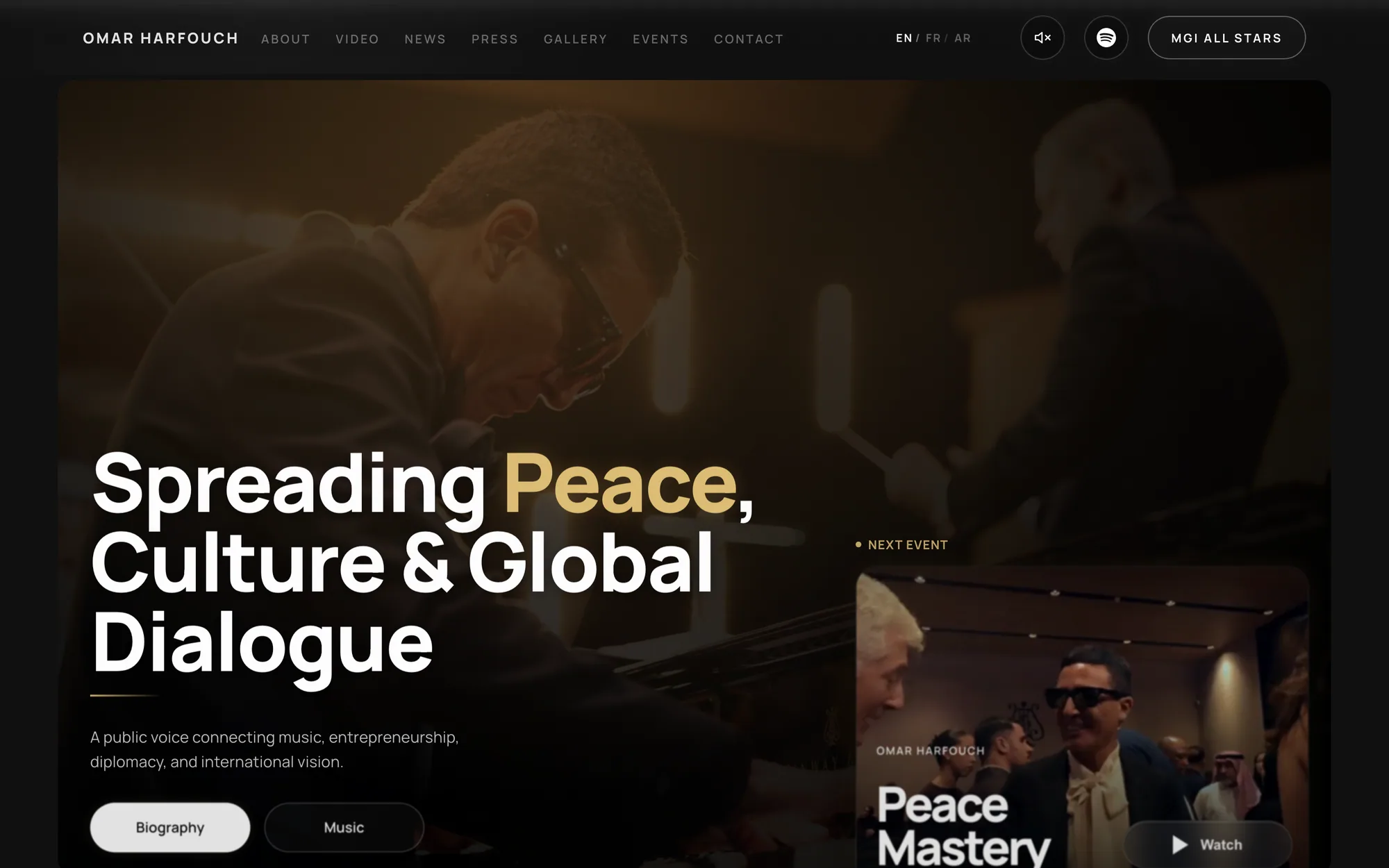
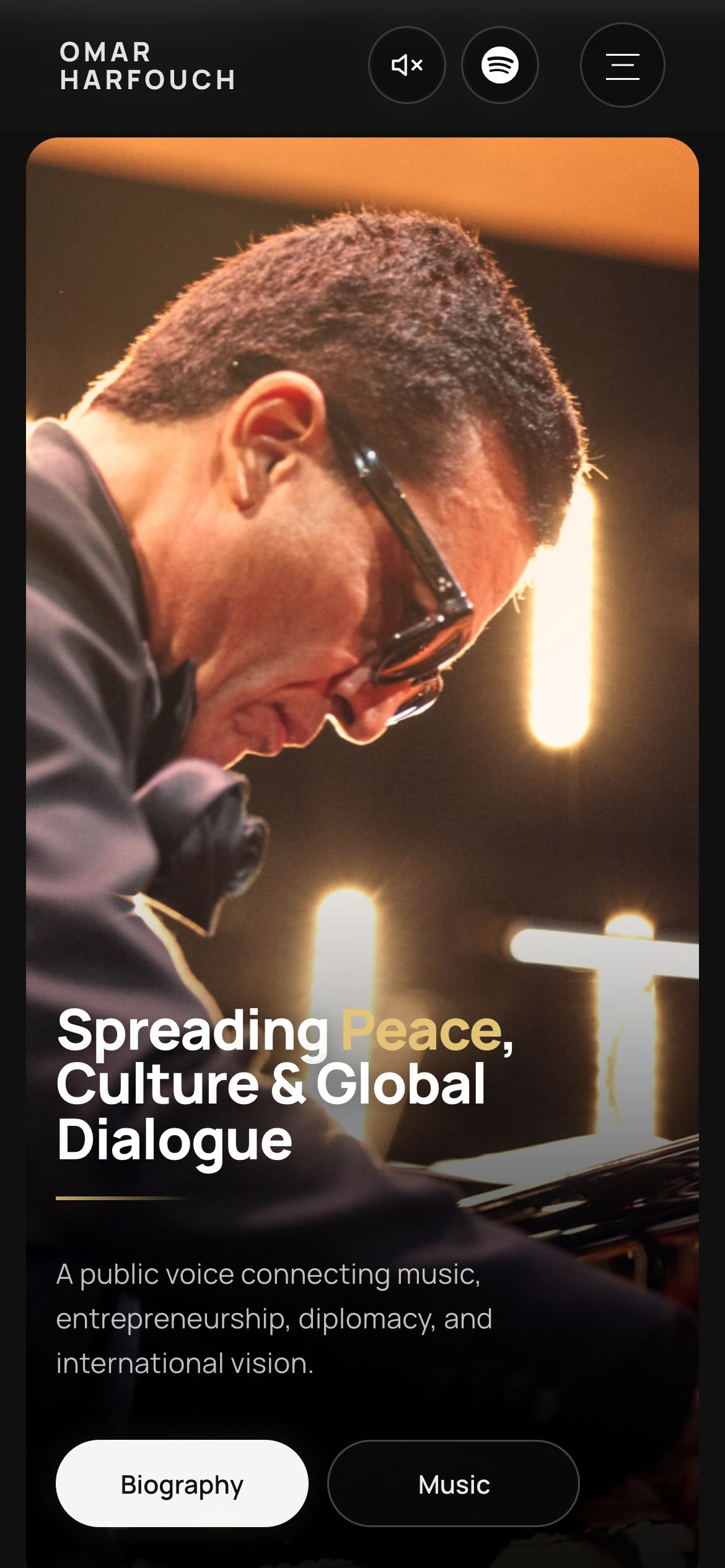
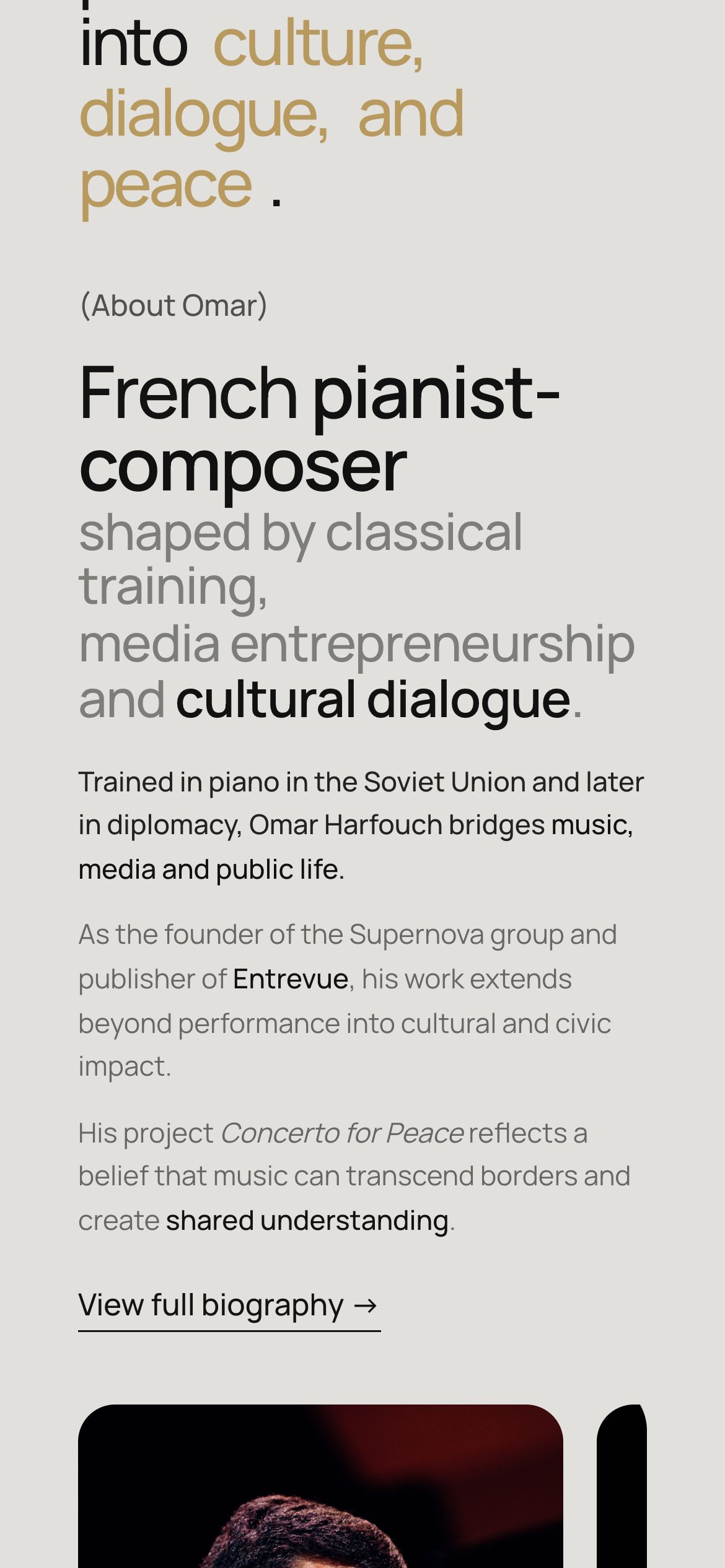
Omar Harfouch is a French pianist and composer whose work also reaches into media, public life and cultural diplomacy — including the Concerto for Peace. The website brings all of it together. Its own line sums up the brief better than I could: a public figure cannot be reduced to one title.
The trap: one tidy narrative
A public identity this broad resists a single storyline. Lead with music and the public work disappears. Lead with public life and it reads like a press office. Put everything on the homepage and it becomes a noticeboard.
The answer was structure, not compression. The site is organised into clear narrative areas — music and performances, initiatives, biography and press — each with its own space, connected by one visual language.
Cinematic, but quiet
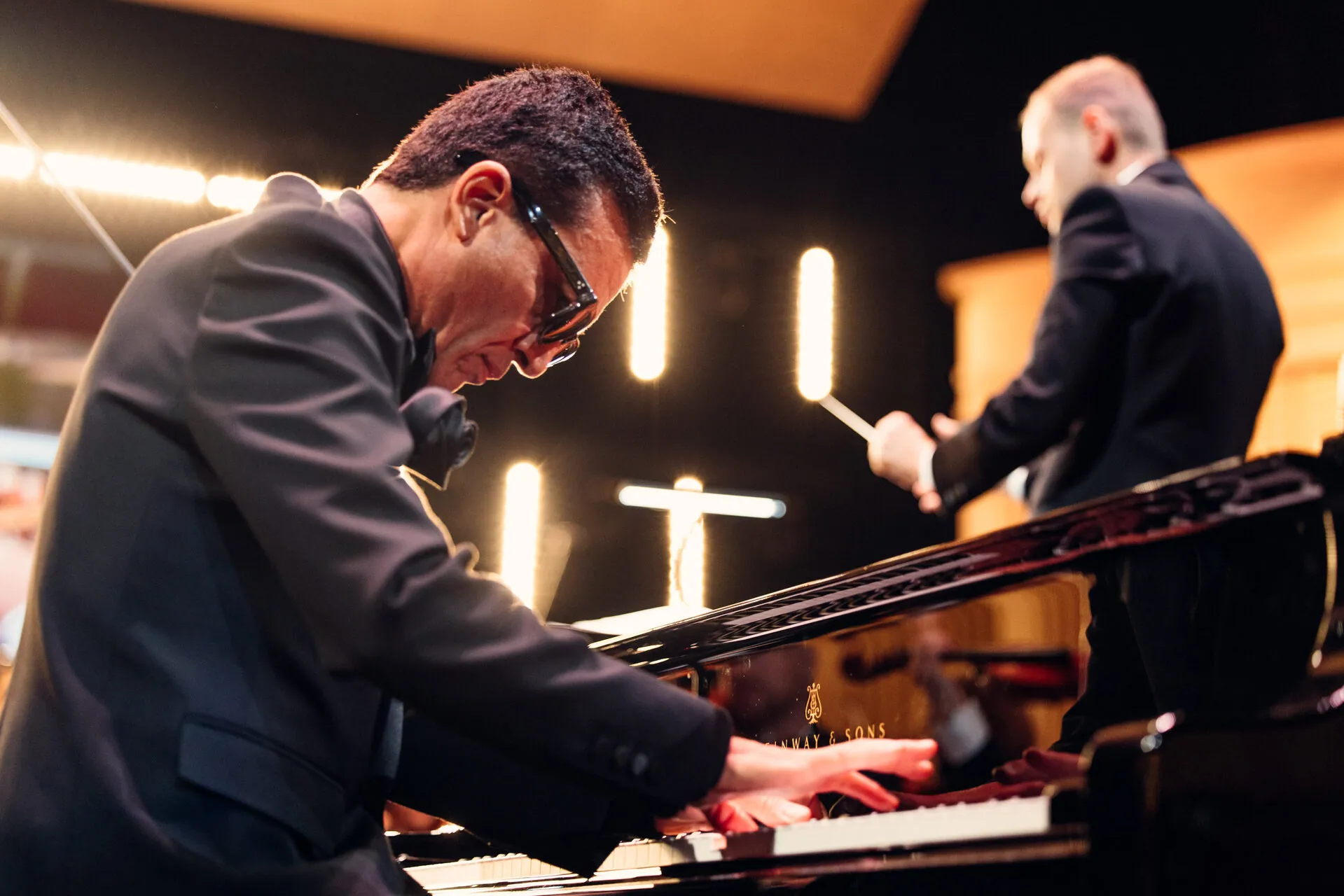
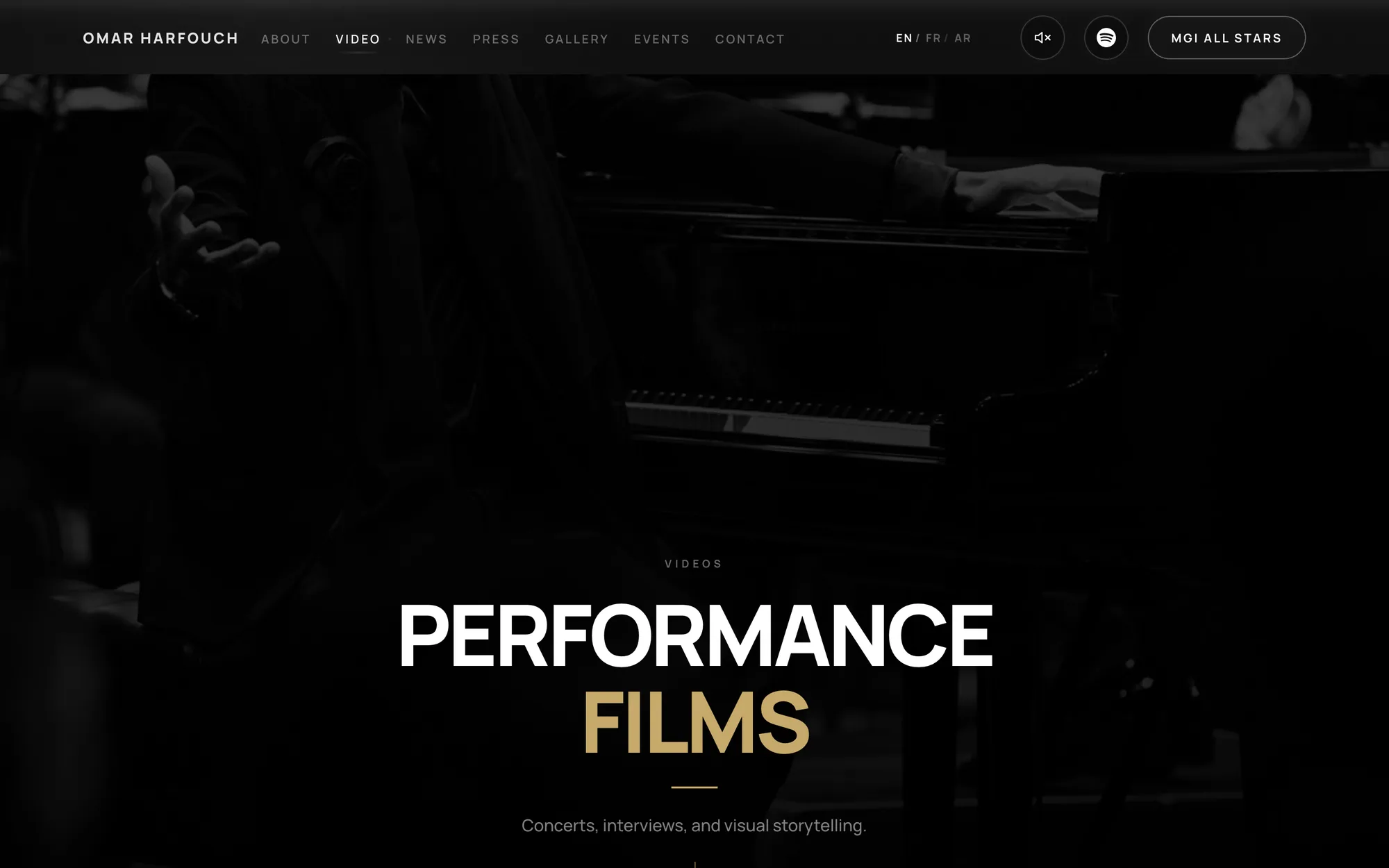
The tone is set by portrait and concert photography, large editorial type and a lot of dark space. Video appears only where it earns its place: the performance films have their own section rather than autoplaying across the site.
Three languages, one structure
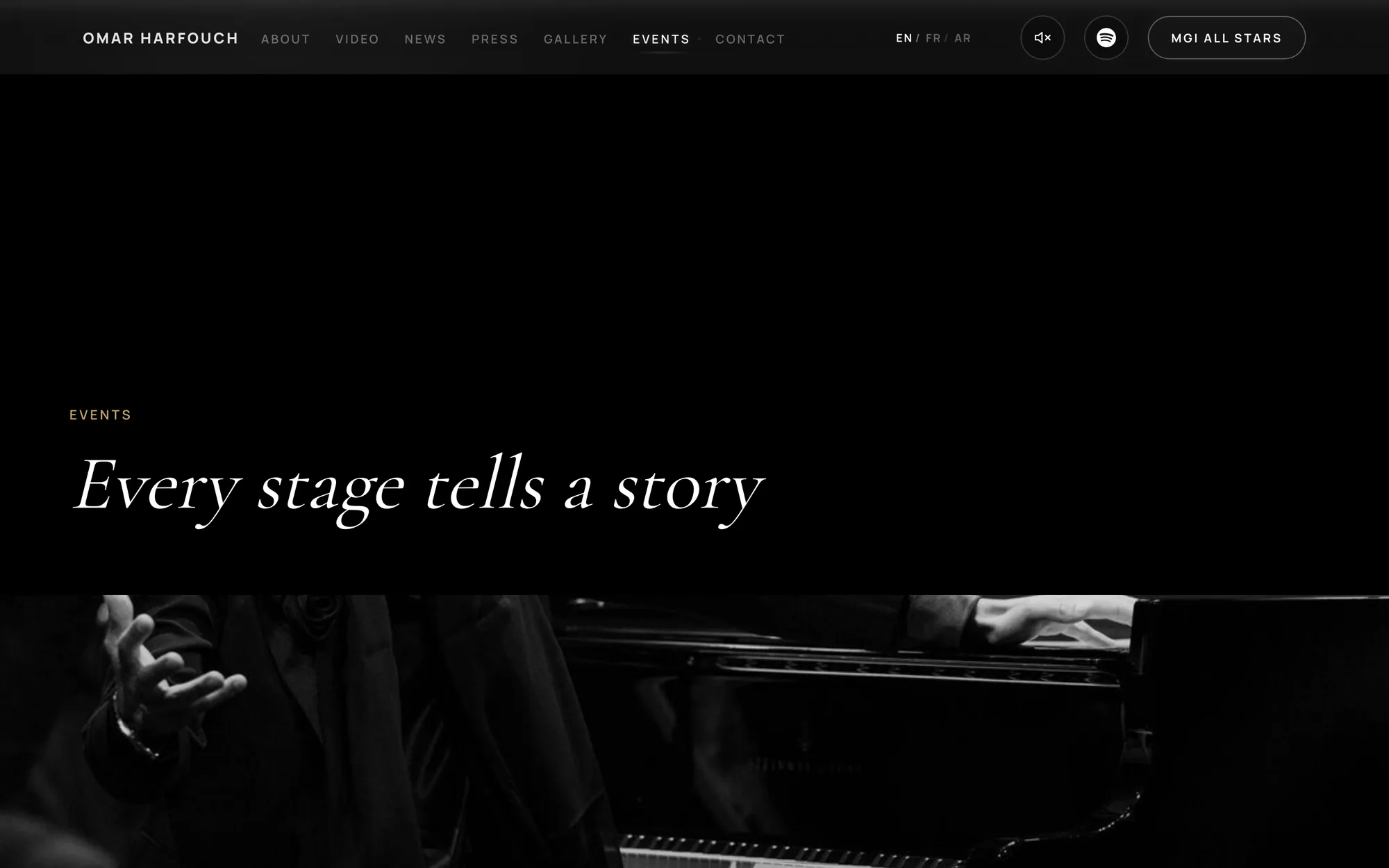
The audience is international, so the platform runs in English, French and Arabic. The rule was simple: the structure is identical in every language. The same sections, in the same order, with the same hierarchy — so the story reads the same wherever the visitor comes from, and the team maintains one site, not three.
Built to keep publishing
Concerts, initiatives and press coverage keep arriving. Reusable WordPress structures let the team add new events and media without touching layout, so the site stays current instead of freezing on launch day.
What generalises
Don't simplify a complex person. Give each part of the story its own room.
For personal platforms of public figures, artists or founders, the hard part isn't the visuals. It's deciding the hierarchy — and then keeping it identical across languages and over time.
— Serhii Rohachov, Kyiv